

Introduction: Navigating the Sales Career Landscape in 2026
Thinking about your next move in sales? You are not alone. The sales job market in 2026 is busier than ever. In fact, the number of commercial roles grew by over 31% between 2024 and 2025, according to SignalHire. That is a huge jump.
But here is the challenge. Sales careers today look very different from just a few years ago. Remote work is the norm. AI tools have become everyday teammates. And buyer expectations keep shifting, as Flexa notes. The old rules of B2B sales no longer apply the same way.
All this change creates confusion. Job seekers face a flood of advice with no clear path forward. That makes focused guidance essential.
This article gives you a simple, evidence-based roadmap for career growth in sales.
We will cut through the noise and show you exactly where the opportunities are. If you have ever wondered how to tell a real opportunity from a dead end, start here.
1. The State of Sales Careers in 2026
The sales job market in 2026 is strong, but the rules have changed. Today’s most sought-after roles reward technical fluency, data literacy, and strategic thinking alongside classic relationship skills, according to Flexa.
What does this mean for you? Sales roles are now more specialized, more remote, and more AI-augmented than they were in 2020. Companies want reps who can use tools like AI assistants for research, call practice, and pipeline management, as Salesforce outlines.
At the same time, human connection still matters. Reed notes that culture and emotional intelligence remain key to success in sales.
Remote and hybrid opportunities continue to grow, giving you more flexibility than ever. But entry-level roles are shifting, so you need a clear strategy.
If you want to explore how to connect with recruiters who understand this new landscape, working with a recruitment agency for sales roles can help you find the right fit.
1.1 Key Market Trends Shaping Sales
So what is really driving change in the 2026 sales job market? Three big trends stand out.
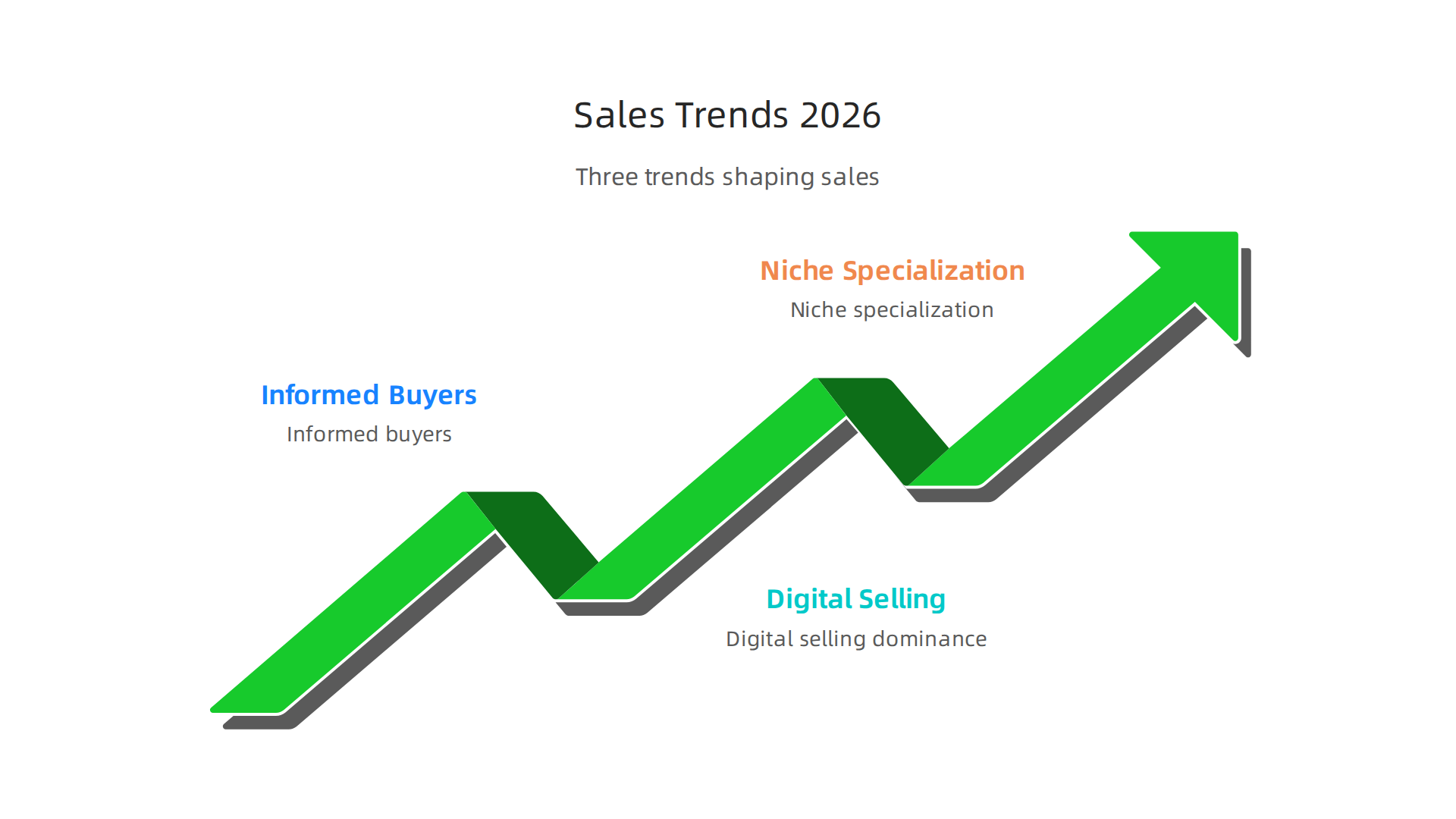
First, buyers have more information than ever. They research products and read reviews before ever talking to a rep. This means you cannot just take orders. You must act as a trusted advisor who adds real value. The modern salesperson needs strategic depth to earn that trust, as Flexa explains.
Second, inside sales and digital selling are overtaking field sales in many industries. Companies now hire for remote and hybrid roles that rely on video calls, CRM tools, and AI assistants. Salesforce notes that AI teammates handle research, call practice, and pipeline management, freeing you to focus on connection.
Third, niche specialization is creating premium career paths. Roles in SaaS, medtech, and fintech pay more because they require deep product knowledge. The global sales job market grew over 30% from 2024 to 2025, according to SignalHire, with specialized roles leading the surge.
If you want to position yourself in one of these high-demand niches, check out how to land a nature sales career in 2026 for a real example of specialization paying off.
1.2 The Rise of Remote and Hybrid Sales Roles
The shift toward remote and hybrid work is one of the biggest changes in sales jobs today.

Remote sales roles are popping up everywhere. Companies now hire reps who can work from home and connect with clients through video calls. As JustSalesJobs notes, sales roles in 2026 are "more remote, more AI-augmented" than before.
But here is the catch. Because talent pools have gone global, competition is fierce. You are no longer just competing with people in your city. You are up against top sellers from around the world. This makes standing out harder than ever.
Hybrid models offer a middle ground. They let you work from home a few days a week while still coming into the office for team meetings and mentoring. This setup helps you stay connected with colleagues and learn from experienced reps without losing flexibility.
To succeed in a remote or hybrid role, you need the right tools. Video conferencing, CRM software, and sales engagement platforms are must-haves. According to Salesforce, AI assistants now handle research and call practice so you can focus on building real connections.
If you are searching for remote sales jobs in 2026, make sure you know how to spot legitimate opportunities. Check out this guide on how to find sales jobs in 2026 without getting scammed to keep your search safe.
2. Essential Sales Skills for 2026
The job market in 2026 demands a fresh mix of abilities. Employers want digital literacy, data analysis skills, and strong interpersonal communication.
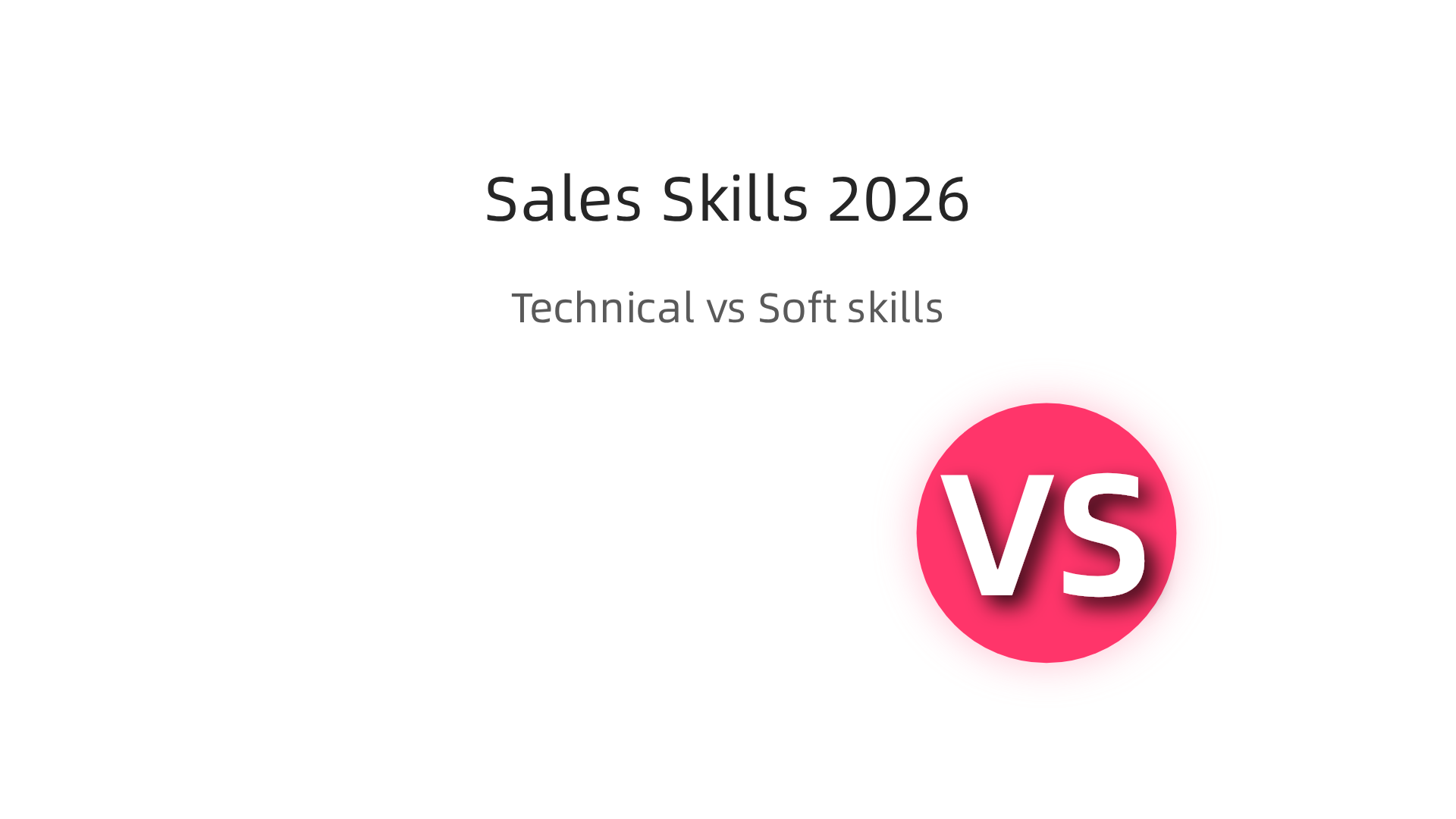
According to Flexa, the most sought-after sales skills include commercial acumen and data literacy. But traditional skills matter too. Active listening, negotiation, and resilience are still core. The difference? You need to adapt them for virtual settings.
Only 27% of sales professionals feel prepared for today’s customer conversations, reports Apollo. That means upskilling is crucial. Sales certifications in methodologies like MEDDIC or Challenger Sale can help you stand out in recruitment. They prove you know modern B2B sales frameworks.
If you want to sharpen your skills, consider using tools that help you identify and close your biggest gaps. Learn how to use Genspark AI for sales to find jobs and close skill gaps. This can give you a real edge in 2026.
2.1 Technical and Digital Skills
Today, you can’t afford to ignore the technical side of sales. Employers in the job market expect more than just a friendly personality. You need hands-on skills with specific tools and data.
CRM tools are almost mandatory. Almost every sales job listing asks for experience with platforms like Salesforce or HubSpot.
According to Salesmate, "CRM proficiency, automation, AI, and analytics are essential sales technical skills that help you move faster, follow up smarter, and sell more strategically." If you want to stand out in recruitment, learn how to manage a pipeline and interpret customer data.
Data analysis helps you prioritize. A big part of B2B sales is knowing which leads to chase and when to follow up. Pipeline management skills let you forecast accurately. This sets you apart from the 73% of sales professionals who don’t feel prepared for today’s conversations, according to Apollo.
AI tools are the new differentiator. Understanding conversational AI or predictive scoring gives you an edge. The Flexa report highlights data literacy as a top skill for 2026. You can start by exploring how to use AI in your daily workflow.
A great way to build these abilities is to focus on a platform like Salesforce. Check out how to Master CRM Implementation Services for Sales Growth and Career Advancement to take the next step.
2.2 Soft Skills and Emotional Intelligence
Technical skills might get your resume noticed. But soft skills are what make you a top performer. In 2026, employers in the job market want people who can connect, listen, and adapt.
Empathy and active listening are non-negotiable. Customers can tell when you really hear them. According to Apollo, essential skills for sales in 2026 combine AI fluency with relational empathy. When you understand a prospect’s pain points, you build trust. That trust leads to closed deals. This is especially true in B2B sales, where relationships matter.
Virtual selling demands high EQ. Without face-to-face cues, you need to read tone and intent. The Flexa report lists commercial acumen and data literacy as top skills, but you also need emotional intelligence to build rapport on video calls.
Conflict resolution and negotiation matter. The MTD Sales Training blog highlights trust-led selling as a major trend. If you can handle objections calmly and find win-win solutions, you become invaluable.
These qualities help you stand out during recruitment. If you want to check your readiness for the market, read our guide on how to find sales jobs in 2026 without getting scammed. It covers how to spot good opportunities and present your best self.
3. Mapping Your Sales Career Path
Once you have the soft skills down, the next step is knowing where you’re heading. Sales career paths are clearer than you might think. They also pay well.
Here is how the typical ladder looks.
Start as an SDR or BDR. Most people begin as a Sales Development Representative or Business Development Representative. This is the entry point. According to Accountmakers, typical total compensation for a BDR in the US ranges from $70,000 to $100,000. You learn how to prospect and qualify leads.
Move to Account Executive. After you prove yourself, you become an Account Executive (AE). AEs handle the full sales cycle. Income here jumps fast.
Climb to management or enterprise roles. High performing AEs can move into team leadership or sell complex deals to big companies. The Sky is the limit. Top performers in specialized fields like medical device or AI sales commonly earn six figures. The SignalHire report shows total compensation packages for US roles ranging from $121K and beyond.
Career switchers have an advantage here. If you came from customer service, teaching, or project management, you already have transferable skills. Your ability to listen, explain, and organize directly applies to sales conversations.
Want to see how others made the leap? Read our guide on unlocking your sales career selling AI companion products in 2026. It shows a real world example of pivoting into a high growth niche.
3.1 Typical Sales Roles and Progression
The sales job market in 2026 is structured like a clear ladder. Most people start as a Sales Development Representative (SDR) or Business Development Representative (BDR).
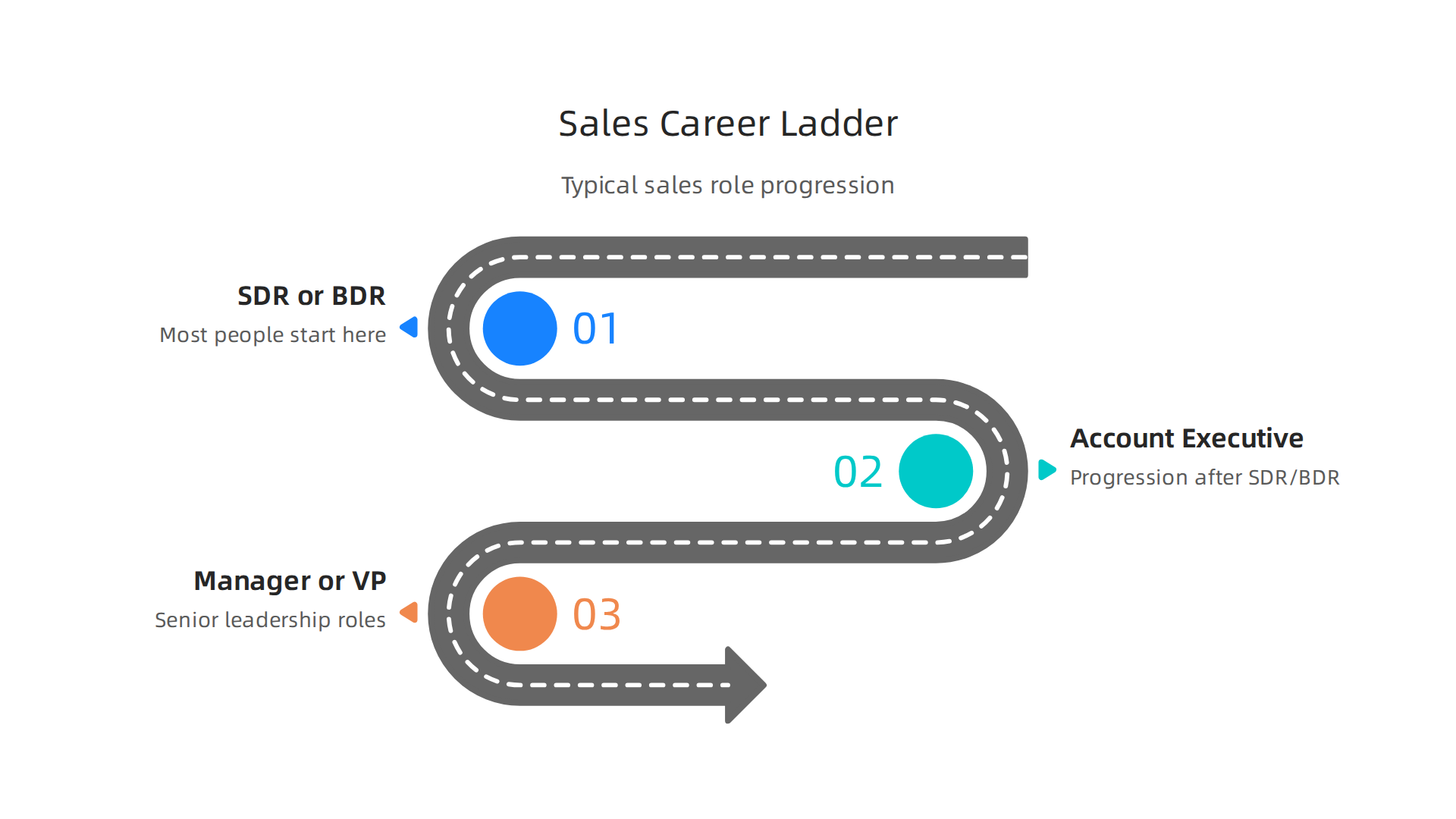
Your main job here is prospecting and lead qualification. You learn how to find potential customers and start conversations. Typical total compensation for a BDR in the US ranges from $70,000 to $100,000, according to Accountmakers.
After you prove yourself, you move into a mid-level role like Account Executive (AE) or Sales Consultant. Now you manage the full sales cycle from first contact to closing the deal. Your income jumps because you start earning real commissions.
Top performers climb into senior roles such as Enterprise AE, Sales Manager, or VP of Sales. These roles involve larger deals, leading a team, and shaping strategy. Total compensation packages for senior US roles can reach $121,000 and beyond, as the SignalHire report shows.
If you are coming from a different field, check out our guide on how to become a retail sales consultant in 2026 for a practical entry point. The path is open, and the recruitment pipeline is hungry for talent.
3.2 Realistic Income Expectations by Level
Let’s talk money. Most sales jobs use a mix of base salary plus commission. Your total pay is called OTE, or on-target earnings.
Here is what realistic OTE looks like in 2026:
- Entry-level roles (BDR/SDR): OTE ranges from $70,000 to $100,000, according to Accountmakers. Your base covers your bills while you learn.
- Mid-level roles (AE/Sales Consultant): OTE jumps to $100,000 to $150,000 or more. Your commission starts matching your base pay.
- Senior roles (Enterprise AE/VP of Sales): Total compensation can reach $121,000 and beyond, as the SignalHire report shows. Top earners in specialized fields go even higher.
But here is the thing. Your income depends heavily on the industry you choose. According to Xactly, SaaS, medtech, and financial services pay significantly more than retail or manufacturing. The Nexford guide notes that a Sales Engineer averages $84,783 per year, while specialized roles in medical device and cybersecurity lead the pack.
One warning: commission-only roles carry real risk. Most legitimate positions offer a healthy base salary. Before you accept any offer, read our guide on how to find sales jobs in 2026 without getting scammed. It will help you spot the bad actors.
The bottom line is clear. Sales can pay very well, but your earnings depend on your role, your industry, and the company you choose.
4. Crafting a Winning Sales Resume and Acing the Interview
Now that you know what you can earn, let’s talk about how to actually land a great sales role. Your resume needs to show specific results. Hiring managers want numbers. How much revenue did you bring in? What percentage of your quota did you hit? The Zendesk guide recommends a clean format with standard fonts. Indeed says to use action words and quantify every bullet point.
Tailor your resume for each job. Use the same sales terms from the job description. This helps you pass automated screening systems and shows you understand the role.
Interviews often include role-play scenarios and behavioral questions. Prepare short stories about how you handled objections or closed tough deals. Practice answering common questions out loud. For a deeper look at preparing for a specific company, check out our step-by-step guide on how to land an Atlassian sales job.
4.1 Resume Strategies That Get Noticed
Let’s talk about how to make your resume stand out. The job market in 2026 moves fast. Hiring managers often scan a resume in less than 10 seconds. You need to grab their attention right away.
First, use a summary statement. This is a short sentence at the top of your resume. It should explain who you are and what you do best. A strong summary connects your story to the job you want.
Second, add numbers to everything. Sales is all about results. Indeed recommends that you quantify your sales experience. Do not just say "Met quota." Say "Exceeded quota by 120% for 4 quarters in a row." Do not say "Handled accounts." Say "Managed a $1M territory and grew it by 15%." The SalesJobs.com guide agrees that specific numbers prove your value better than any buzzwords.
Third, list your tools and certifications. Hiring managers want to know if you can hit the ground running. Mention the CRMs you know, like Salesforce or HubSpot. List any sales certifications you have completed. If you are targeting a specific company, learn their tools first. For example, our step-by-step guide on how to land an Atlassian sales job shows exactly which skills and tools can help you get hired.
4.2 Sales Interview Preparation and Common Questions
Your resume did its job. It got you in the door. Now it is time to prepare for the interview and close the deal.
In 2026, sales interviews focus on real skills and real scenarios. You will almost certainly hear common questions like "Walk me through your sales process." You might also get "How do you handle an objection?" Hiring managers want to see if you can think on your feet. Zendesk points out that showing your process clearly and confidently is a huge win during these moments.
Role play is also a big part of the interview. You need to show you can adapt to a tough customer and still close the deal.

The best way to get ready is to practice with a friend or mentor. Have them throw hard objections at you. This builds real confidence and helps you avoid freezing up.
You also need to do your homework. Before any interview, research the company’s product, their main competitors, and the sales methodology they teach. Do they use SPIN selling or the Challenger Sale? Knowing this helps you speak their language and shows you are serious. If you want more tips on where to look for great roles, read our guide on how to find sales jobs in 2026 without getting scammed so you can focus your energy on the best opportunities.
5. Identifying Legitimate Sales Roles vs. Red Flags
Once the interviews start rolling in, you need to separate the good opportunities from the bad ones. Not every listing in the job market is a real career move for a B2B sales professional.
What Legitimate Roles Look Like
Real sales jobs offer a base salary plus commission. They provide structured training and a clear path to growth. If you want to know what fair pay looks like in 2026, checking salary benchmarks from experts like Randstad is a smart way to compare offers.
Warning Signs to Watch For
Multi-level marketing and pure commission roles often ask for an upfront investment. That is a major red flag. These schemes usually have very high turnover because the product is weak or the pay is unstable.
How to Research Before You Commit
Always look up company reviews on sites like Glassdoor. Ask specific questions about average earnings. If a company avoids answering, move on. You can also save time by using a recruitment agency for sales roles to find vetted opportunities.
5.1 How to Spot MLM and Commission-Only Schemes
Here’s the thing: some companies in the job market dress up multi-level marketing as a real B2B sales career.

Once you know what to look for, these red flags become easy to spot.
They focus on recruiting, not selling.
A real sales role focuses on selling a product or service to customers. An MLM opportunity pushes you to recruit new members into the team. If the job description talks more about building a downline than closing deals, that is a strong warning.
They ask for your money upfront.
Legitimate employers never ask you to pay for training, inventory, or starter kits. According to the 2026 Sales Salary Guide from Randstad, real companies offer a base salary plus commission. If a role requires an upfront payment, it is almost always a scheme.
They promise huge earnings with no proof.
MLMs love flashy income claims and luxury car photos. But when you dig deeper, you see very few people actually make that money. The pressure to buy in fast and silence your doubts is a classic trick.
To save yourself time and stress in your search, learn more about how to find sales jobs in 2026 without getting scammed. It covers more practical ways to keep your career on safe ground.
5.2 Researching Company Culture and Compensation
Now that you know how to spot the traps, it is time to check if a company is worth your time. Real B2B sales jobs have clear pay plans and honest cultures. Here is how to research both.
Start with review sites and forums.
Look for patterns in comments about management, turnover, and training. Sites like Glassdoor and LinkedIn help you see what current and past employees really think. If you see the same complaint over and over, pay attention.
Ask specific questions in interviews.
Do not settle for vague answers. Ask things like, "What does a typical month look like for earnings?" or "What is the average tenure of your top reps?" The 2026 Sales Salary Guide from Randstad shows that legitimate companies are open about compensation. If they dodge your questions, that is a warning sign.
Check for a clear growth path.
The best companies invest in their people. See if the role offers ongoing training and a clear way to move up. Look for roles that match the pay ranges in guides like the 2026 Salary Guide from Robert Half to make sure you are getting a fair deal.
Take your time with this step. It saves you from wasting months in a bad fit. For more tips on navigating the job market safely, check out this guide on how to find sales jobs in 2026 without getting scammed.
6. Thriving in Remote Sales
You found a real remote role. Now the real work begins. Remote sales in 2026 demands more self-discipline and structure than an office job.

New remote reps often need about 23% longer to reach full productivity, according to sales training research. That gap comes from losing casual in-person learning.
To bridge it, build strong habits. Set a daily schedule and stick to it. Block time for prospecting, calls, and follow-ups. Proactive communication with your manager and team keeps you visible and supported.
Building rapport without body language takes extra effort. Use structured virtual meeting techniques. Start calls with a clear agenda, ask open questions, and share your screen to guide the conversation.
Finally, lean on sales engagement platforms and analytics. Tools like a good CRM give you a clear view of your pipeline so nothing slips. Check out this guide on mastering CRM implementation for sales growth to set up a system that works for you.
Remote sales is doable. It just takes intention and the right tools.
6.1 Adapting Your Sales Approach for Virtual Environments
So you have the right habits for remote work. Now you need to adjust how you sell on camera. A virtual demo or call is not the same as an in-person meeting. You have less time and more distractions.
Here is how to adapt your approach for 2026:
Shorten everything. Cut your presentations in half. Use screen sharing early to guide the conversation visually. Ask more questions right away to understand the buyer’s needs. This keeps them engaged. According to this virtual sales best practices guide, building relationships through a screen takes deliberate effort.
Stand out with video follow-ups. After a call, do not just send a boring email. Record a short, clear video message recapping your discussion and next steps. It adds a human touch that gets noticed. This is one of the top tips from a 2026 guide to virtual selling.
Master your tech stack. Your CRM, video tools, and email sequencing software must work perfectly. You cannot afford glitches during a client call. A solid B2B sales CRM helps you track every touchpoint and stay organized.
For more on setting up your systems, check out this guide on mastering CRM implementation for sales growth. It will help you build the foundation you need to sell effectively from anywhere.
6.2 Tools and Best Practices for Remote Sales Success
Your new sales approach is ready. Now you need the right tools and habits to make it work every day. The job market in 2026 rewards sales pros who are tech-savvy and self-disciplined.
Your essential remote sales toolkit. These tools help you stay organized and close more deals:
- Zoom for stable, high-quality video calls
- LinkedIn Sales Navigator for finding and researching prospects
- Outreach or SalesLoft for automated email sequences and follow-ups
- Gong for recording and analyzing your sales calls to improve your pitch
- A strong CRM to track every interaction
These tools are not optional anymore. Sales roles in 2026 are increasingly data-driven and remote, according to this overview of how sales jobs are changing. A good CRM keeps your pipeline organized and your follow-ups on time.
Create a focused work routine. A dedicated workspace is crucial. It helps you switch into "work mode" fast. Block out specific hours each day just for prospecting. Set separate time for follow-ups and admin tasks. This structure keeps you productive without burning out.
Join virtual sales communities. You cannot rely on office water cooler chats anymore. Connect with other sales pros in online groups. Share tips, ask questions, and learn from peers. This helps you stay sharp and find new opportunities in the job market. For more strategies on finding the right sales roles, check out this guide on how to find sales jobs in 2026 without getting scammed.
Build the right setup and habits, and you can sell successfully from anywhere.
Summary
This article maps a practical career roadmap for sales professionals navigating the changed marketplace of 2026. It explains how demand has shifted toward specialized, remote and AI-augmented roles, and outlines the market trends driving that change, from informed buyers to niche technical openings. You’ll learn which hard and soft skills matter now—CRM and data literacy plus emotional intelligence—and which tools and certifications can make you more competitive. The piece also covers realistic pay expectations by level, a clear progression from BDR/SDR to AE and leadership, plus concrete resume and interview tactics that hiring managers reward. Finally, it shows how to spot scam or commission-only offers and gives actionable routines and toolsets to succeed in remote selling.