
Why ‘lovable AI’ matters for sales job seekers and reps right now
Finding a great sales job or even doing your current sales job well can feel tricky in 2026. Maybe you’ve seen lots of different advice online, but it’s hard to know what’s really helpful. You might also worry about whether you have the right skills for today’s sales world. On top of that, a big change is happening: Artificial Intelligence, or AI, is everywhere. Many companies are already using AI tools. A big study in early 2026 showed that almost 53% of people now use generative AI in their daily lives, and leading AI companies are growing very fast [Stanford HAI PDF].
It’s a lot to take in! You might wonder how to use an AI assistant to help you, or if you need to learn complicated new things. You may even hear about tools like Viggle AI or Midjourney AI that create images or videos, and think, "How does that help me sell?" The real problem is not enough clear, easy-to-understand help on how to use AI in sales, especially for job hunting or getting better at your work.

That’s where the idea of "lovable AI" comes in. We believe that AI tools should be simple and helpful, not scary or confusing. This guide will make AI friendly and useful for you. We’ll show you practical ways to use AI for finding sales jobs, building important sales skills, and even becoming a pro at remote selling. For instance, understanding how AI can boost your work can be a huge advantage for sales professionals Learn how to use an AI upscaler for sales.
This article is for everyone looking to do better in sales. It’s for you if you’re searching for your first sales job, if you’re changing careers to sales, or if you’re new to the field. It’s also for experienced sales professionals who want to sharpen their edge. And if you work from home, selling remotely, this guide has special tips for you too. Our goal is to give you trusted steps to make AI a true helper in your sales journey, making it a truly lovable ai experience.
How employers view AI-savvy sales candidates in 2026
In 2026, companies looking to hire sales professionals aren’t just looking for people who know about AI. They want to see how you use it. Think of it this way: employers want to know you can make AI a "lovable AI" helper, not just a fancy word on your resume.
What Hiring Managers Expect: Practical AI Skills
Hiring managers now expect sales job seekers to understand and use AI tools in practical ways. It’s not about being an AI expert who can build programs. It’s about showing you know how to make your daily sales tasks easier and more effective with an AI assistant [Temple University Fox School of Business]. For example, a survey found that many corporate workers already use generative AI every day, showing how common these tools are becoming in the workplace [MUFG Americas PDF]. So, companies want you to be ready to jump in and use them from day one. They are looking for people with basic AI knowledge and who can adapt and solve problems with these new tools.
Showing Off Your AI Skills on Resumes and LinkedIn
So, how do you show you’re good with AI? Don’t just list "AI knowledge" on your resume. Instead, give real examples.
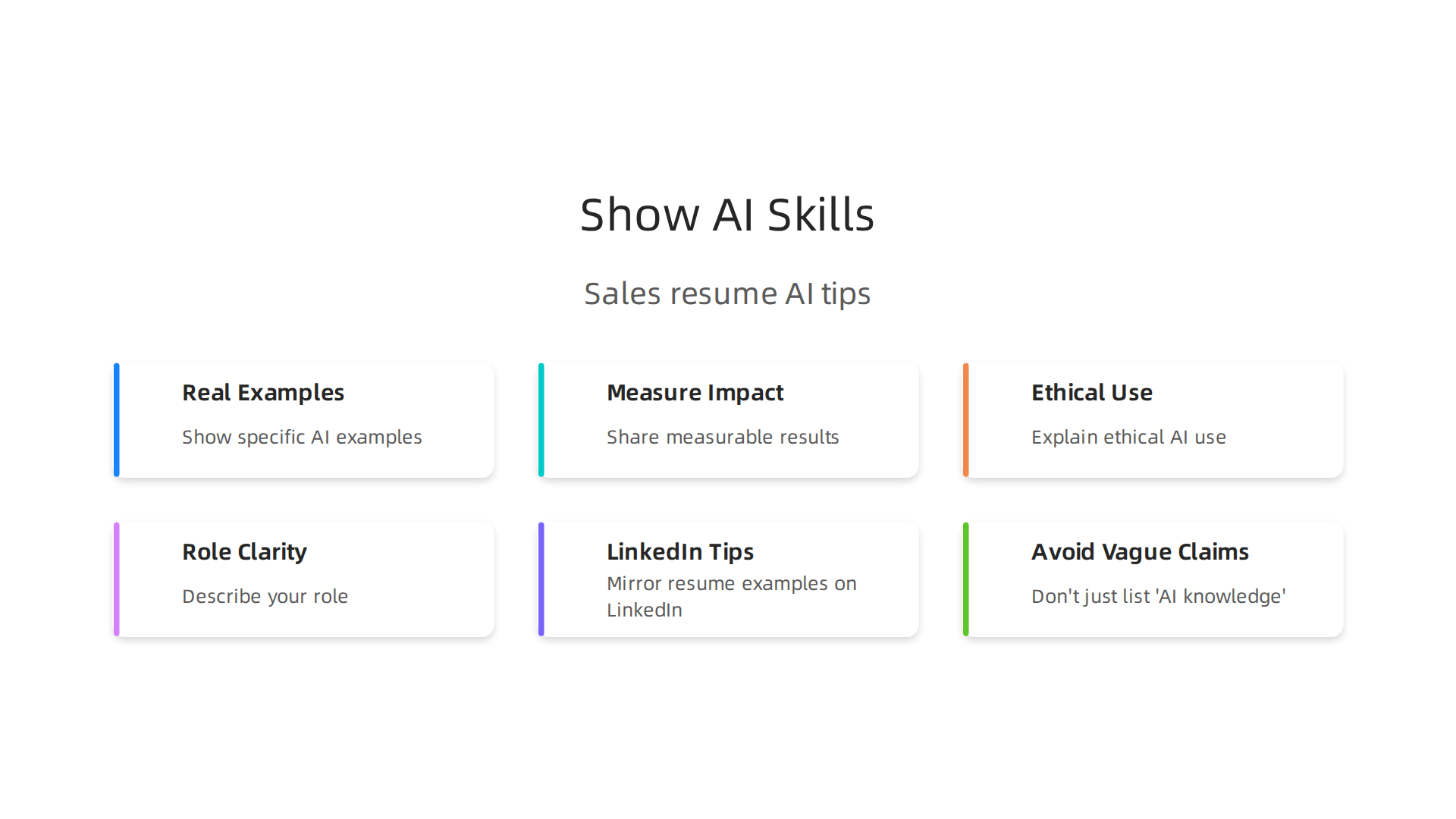
- Be Specific: Instead of saying "familiar with AI," you could write, "Used an AI assistant to quickly gather key information about customer needs, leading to more personalized sales pitches."
- Highlight Results: Did using AI help you save time? Improve your leads? Mention that! For instance, you might say, "Leveraged AI tools to analyze market trends, cutting research time by 20%."
- Show Ethical Use: Employers also want to know you use AI responsibly [Las Positas College]. This means reviewing what an AI assistant creates and making sure it’s accurate and truly your work [University of South Carolina]. You use AI to strengthen your work, not to create it from scratch [RMU Career Center].
These specific examples show you’re not just aware of AI tools like Midjourney AI or Viggle AI for creative projects, but you can use practical AI in a sales setting. For instance, using AI question-answering tools can greatly help with sales mastery.
Connecting Transferable Skills with AI-Assisted Results
If you’re new to sales or changing careers, you still have many great skills from past jobs. These are called transferable skills. Now, you can show how AI helps you make those skills even stronger for sales.
- Example for Organization: If you were great at organizing things in a past job, you could say, "My strong organizational skills, boosted by an AI assistant for managing client data, ensure no lead is missed."
- Example for Research: If you were good at finding information, you might write, "Enhanced my research abilities by using AI tools to quickly identify potential customer pain points, creating more relevant sales discussions."
By showing how your existing strengths work with helpful AI tools, you tell employers you’re a modern, adaptable sales candidate ready for 2026.
In 2026, many helpful AI tools are available for sales professionals. These tools are like smart assistants that make your job easier and more effective. We like to call them "lovable AI" tools because they truly help you get more done without feeling like extra work. They save you time and help you sell more. Over half of all corporate workers are using generative AI tools daily, showing just how common they are becoming in workplaces everywhere [MUFG Americas PDF].
Let’s look at the main types of these helpful AI tools for sales reps.
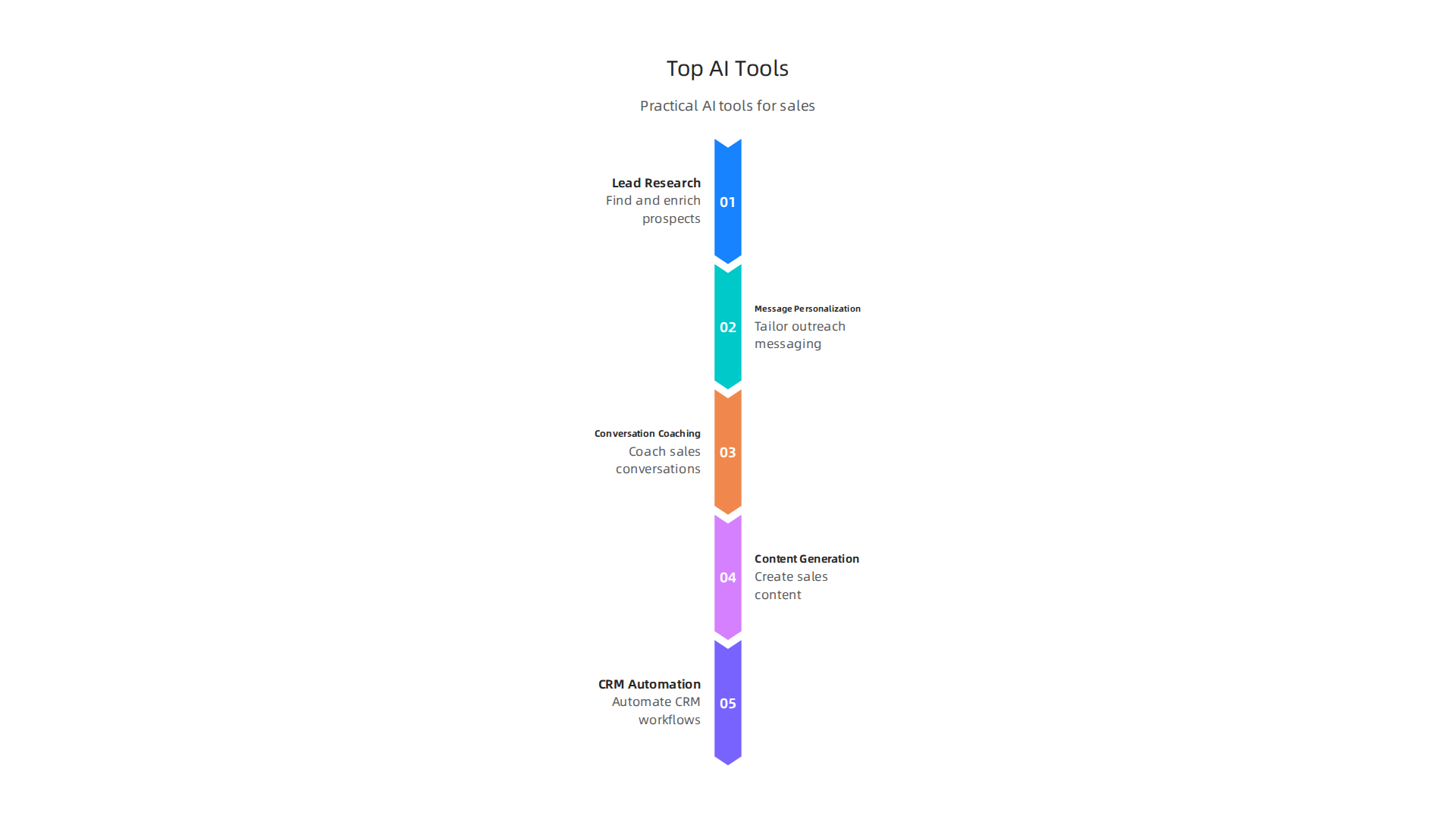
Lead Research & Enrichment
This type of AI tool helps you find out important things about the people you want to sell to. It’s like having a super-fast detective that gathers facts.
- What it does: It digs up contact details, company information, and even what a potential customer might need. This makes it easier to know who to talk to and what to say [Trellus].
- How it helps: You save a lot of time on research. It also helps you find better leads, so you’re talking to people who are more likely to buy. This kind of AI assistant helps you leverage AI question-answering tools for sales mastery.
- Things to remember: Always double-check the information the AI gives you. It’s smart, but sometimes details can change.
Message Personalization
Imagine writing an email that feels like you wrote it just for one person, even if you send many. That’s what message personalization AI does.
- What it does: It helps you create emails and messages that sound personal to each customer. It can suggest how to make your words sound just right [monday.com].
You could even use an "ai humanizer free" tool to help your messages feel more natural.
- How it helps: Customers are more likely to open and reply to messages that feel personal. This can lead to more meetings and sales.
- Things to remember: While AI can suggest words, make sure the final message sounds like you. Your human touch is still super important.
Conversation Coaching
Sometimes, getting tips on how you talk to customers can make a big difference. This AI tool does just that.
- What it does: It can listen to your sales calls and give you advice. It might tell you if you talked too much, or if you missed a chance to ask a good question [ORSYS].
- How it helps: You get better at talking to customers, understanding their problems, and handling their concerns. This can help you close more deals.
- Things to remember: It might feel a bit odd to have an AI listen in at first. But remember, it’s there to help you grow.
Content Generation
Writing emails, quick notes, or social media posts can take a lot of time. Content generation AI is a helpful writing partner.
- What it does: This AI assistant can help you write drafts for emails, summaries, or even ideas for social media posts quickly [Highspot]. It’s good for text, not for making pictures like Midjourney AI or Viggle AI.
- How it helps: It saves you time writing everyday sales content, so you can focus on selling. It also helps keep your messages clear and consistent.
- Things to remember: Always read what the AI writes. You need to make sure it’s accurate and sounds exactly how you want it to. Think of it as a first draft helper.
CRM Automation
CRM stands for Customer Relationship Management. It’s where you keep all your customer information. AI can make managing this much simpler.
- What it does: This AI tool automatically updates customer records, schedules follow-ups, and handles other routine tasks in your sales system [Mixmax]. It acts like an efficient AI sales agent.
- How it helps: It saves you from doing boring, repetitive tasks. This frees up your time to talk to customers and focus on closing deals.
- Things to remember: Make sure the AI is set up correctly so it updates information the right way. It makes sure your customer data is always tidy.
These lovable AI tools are changing how sales reps work in 2026. They help you be faster, smarter, and more successful.
Step-by-step: Using Lovable AI to Improve Your Sales Job Applications
Finding a new sales job can take time, especially writing good resumes and cover letters. But here’s some good news: you can use lovable AI tools to help you! These smart assistants can make your job applications stand out in 2026, but it’s important to use them wisely. You want the AI to help you, not write your whole story for you.
Tailoring Your Resume and Cover Letter
The first step is to make sure your application fits the job you want. Many sales jobs list specific skills and words they are looking for. An AI assistant can read the job description and then help you change your resume and cover letter to match. It’s like having a friend who helps you find the right words from your experience to show you’re a perfect fit. However, remember that what you submit must always be truly yours, not just copied from the AI [University of South Carolina PDF].
For example, you can ask an AI assistant to:
- Point out important keywords from the job description.
- Suggest ways to phrase your skills so they sound like what the employer wants.
- Help you write a strong introduction for your cover letter that gets attention.
Crafting Strong Achievement Statements
When applying for sales jobs, it’s not enough to just say what you did. You need to show how well you did it. This means using numbers and facts. An AI can help you turn your past work into powerful achievement statements. For instance, instead of saying "Sold a lot of products," you can use an AI to help you write "Increased product sales by 15% in one quarter."
Here’s the thing: while an AI can suggest how to say it, you must provide the real numbers and facts. It’s your job to verify everything the AI helps you write to make sure it is true and accurate [career.uconn.edu]. Think of it as an "ai humanizer free" tool that makes your achievements sound professional and impactful. For more tips on using AI in your career, check out our guide on how to leverage AI question-answering tools for sales mastery.
Your Checklist for AI-Generated Content
Before you send out any job application, always double-check what your lovable AI assistant helped you create. Using AI responsibly means you review everything carefully [UNLV].
Here’s a simple checklist to follow:
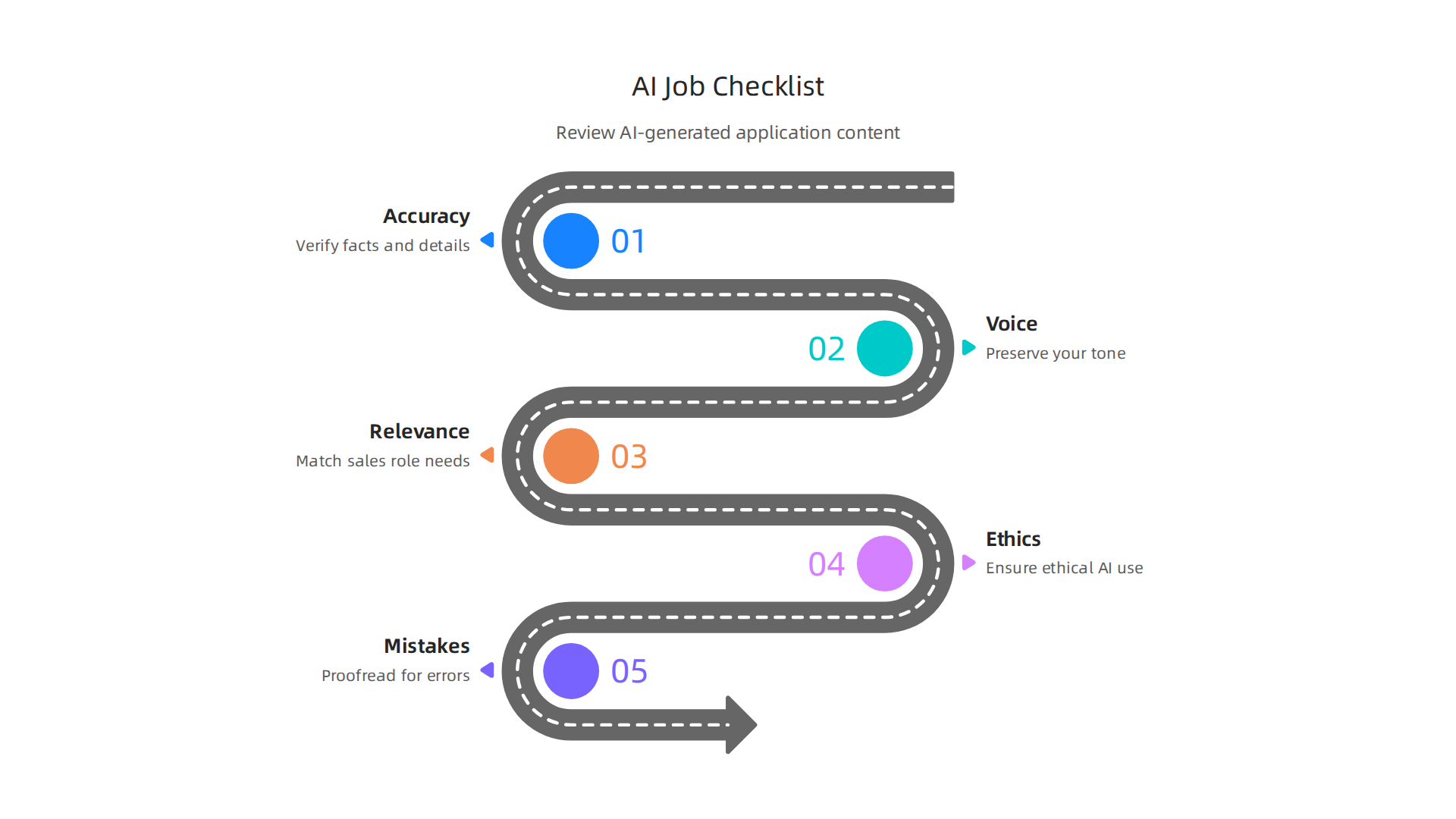
- Is it true? Every single fact and number must be correct.
- Does it sound like you? The voice and tone should still be yours, not like a robot wrote it.
- Does it directly answer the job needs? Make sure it clearly shows why you’re good for this specific job.
- Are there any mistakes? AI can sometimes make errors, so proofread for grammar and spelling.
- Did you remove extra fluff? Keep it clear and to the point.
- Is it ethical? Make sure you are using AI to strengthen your work, not to create content that isn’t truly based on your experiences [RMU Career Center].
By using lovable AI tools in these smart ways, you can make your sales job applications shine. You save time and create a stronger impression, all while making sure your unique experience is the star.
Preparing for Sales Interviews with AI Coaching and Roleplay
After your lovable AI assistant helps you make your job application perfect, the next big step is the interview! Interviews can feel tricky, especially for sales jobs where you need to show off your skills in talking to people and solving problems. Good news: lovable AI can also be your secret weapon here in 2026, helping you get ready.
AI as Your Practice Partner
Imagine having a friend who can pretend to be your future boss and ask you tough interview questions. That’s what an AI assistant can do!

These smart tools can run practice interviews, making you feel more ready. They help you get better at two key sales skills:
- Handling objections: This is when a customer or interviewer raises a concern or says "no." AI can give you chances to practice what to say.
- Discovery skills: These are about asking good questions to truly understand what someone needs or thinks. An AI can help you practice asking smart questions.
Many of the best AI sales tools in 2026 are designed to help you sharpen these skills, making sure you are ready for real-world talks with customers or interviewers [getalai.com].
Setting Up Your AI Interview Practice
To make the most of your lovable AI coach, you can set up practice sessions:
- Pick scenarios: Ask the AI to create different interview situations. Maybe it’s a very happy customer, or one who has many questions. You can even practice talking about tough sales situations.
- Get feedback: The AI can listen to your answers and give you tips. It might tell you if you spoke clearly, if your answer made sense, or if you missed something important. Think of it like an "ai humanizer free" tool that helps you sound more natural and confident.
- Try again: The best part about AI practice is you can do it many times! You can keep trying until you feel strong and sure about your answers. This kind of ongoing practice is key to improving any sales skill [kairntech.com].
This way, you build confidence and learn to think fast, which is super important in a sales interview.
Mixing AI Coaching with Real Human Advice
While lovable AI is fantastic for practice, it’s also smart to get feedback from real people. A human friend, mentor, or career coach can give you advice that an AI might miss. They can understand feelings and how people react in ways that even the smartest AI can’t quite match yet.
By using both AI for lots of practice and real people for deeper insights, you can build very strong selling skills. This combined approach will make you shine in your next sales interview in 2026. For more ways AI can boost your career, consider exploring how to leverage AI question-answering tools for sales mastery.
Transitioning into sales: using lovable AI to close skill gaps for career switchers
Many people dream of switching careers and sales can be a great choice. Maybe you’re coming from teaching, customer service, or even managing a store. You might already have useful skills like talking to people, listening carefully, or solving problems. The good news is, a lovable AI can help you turn those skills into sales success and fill in any missing parts in 2026.
Finding Your Sales Superpowers with AI
Think of your current job skills as hidden sales superpowers. An AI assistant can help you see how what you already know can be used in sales. For example, if you’re good at helping unhappy customers, that’s like handling sales objections. If you’re great at asking questions to figure out what someone needs, that’s a key "discovery skill" in sales.
AI tools can give you practice for the parts of sales that feel new. They can help you write your first sales emails, learn how to talk about products, or even understand how to find new customers [monday.com]. Many AI tools for sales help with tasks like writing messages, getting insights from customer data, and even forecasting what customers might buy next [highspot.com]. This means you can quickly get good at the practical side of sales, even if you’re just starting.
Learning the Sales Ropes with Your AI Coach
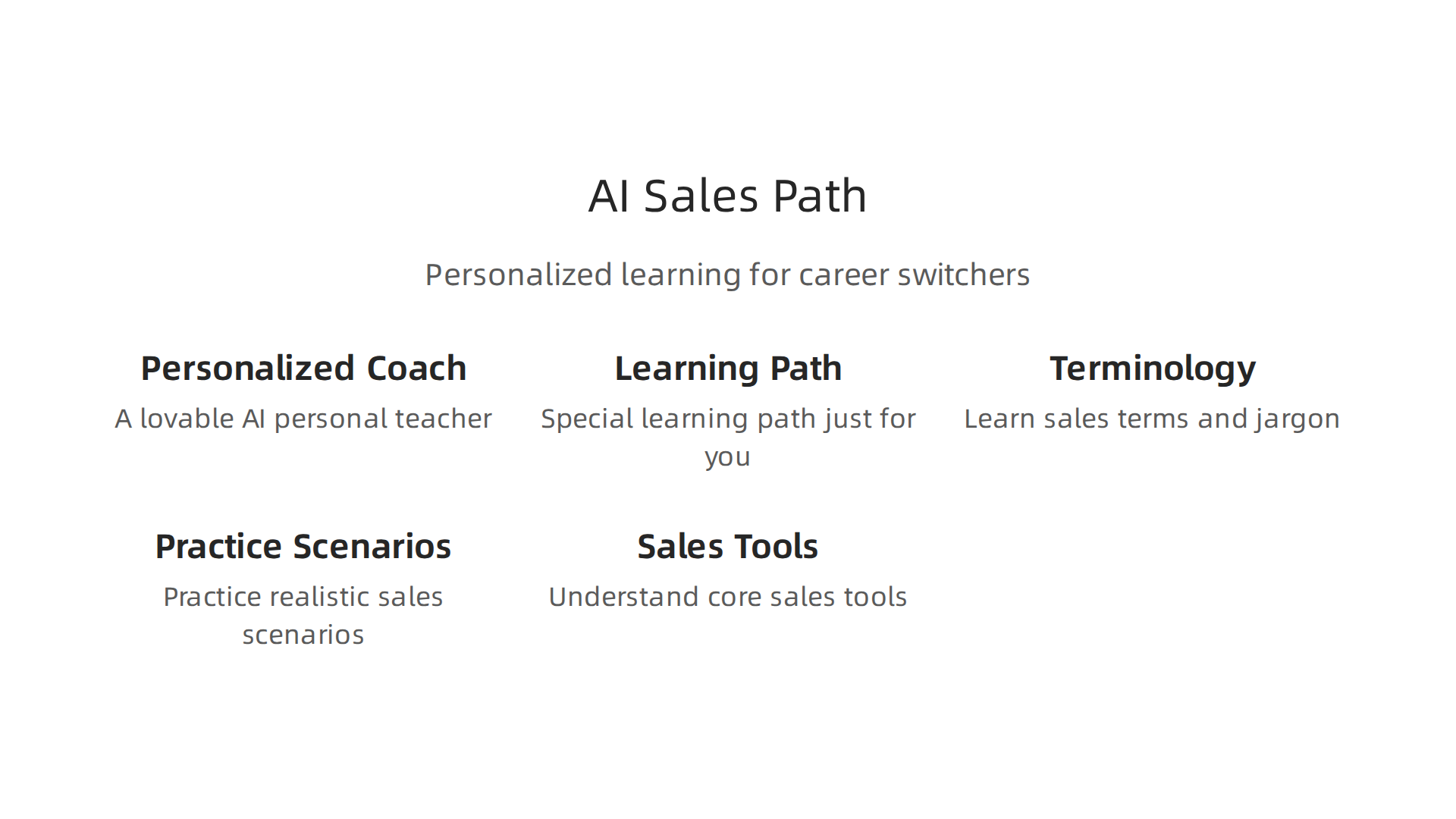
To really get ready for a sales job, you need to learn some sales basics. A lovable AI can be your personal teacher, making a special learning path just for you.
It can:
- Teach you sales words: Learn common terms like "lead" or "pipeline" with simple explanations.
- Create practice lessons: The AI can make up sales situations for you to practice, like how to introduce yourself to a new customer or what to say if they’re not interested.
- Help you understand sales tools: Many sales teams use special computer programs. Your AI assistant can help you learn what these tools do and how they make sales easier [mixmax.com].
This way, you don’t just learn about sales, you actually get to practice it. It’s like having a pretend sales job where you can make mistakes and learn from them without any real pressure. Some tools even act like an "ai humanizer free" service, helping you make sure your sales messages sound natural and friendly.
Showing Off Your New Skills
When you apply for sales jobs, you’ll need to show what you can do. Your lovable AI practice can become a big part of your story. You can talk about:
- Your AI practice sessions: Tell interviewers how you used AI to practice tough sales conversations or learn new skills. This shows you’re eager to learn and use new technology.
- Examples of your work: You can create mock sales emails or scripts you wrote with AI help. This shows you understand how to talk to customers and present solutions.
- What you’ve learned: Explain how your AI coach helped you get better at listening or asking smart questions.
This approach proves you’re serious about sales and ready to jump in. With AI by your side, you can confidently tell your future employer that you’re ready for the sales world in 2026. If you’re interested in how AI is changing sales jobs, you might also want to learn about what an AI sales agent really means for your career in 2026.
Remote selling playbook: integrating lovable AI into virtual workflows
Working in sales from home means you need smart tools to help you reach customers far away.

This is where a lovable AI becomes your best friend. In 2026, many remote sales teams are using AI to make their work smoother and more effective, especially for connecting with people online.
How AI Helps with Finding and Talking to Customers
A good AI assistant can greatly improve how remote sales reps find new customers, send messages, and prepare for online meetings.
- Finding new customers: AI can look through lots of information to find people or businesses that are likely to buy your product. It helps you focus your efforts on the best leads, saving you time.
- Sending messages: When you can’t meet in person, sending good emails or messages is key. A lovable AI can help you write emails that sound friendly and personal, even if you need to send many. Think of it as an "ai humanizer free" helper that makes sure your words sound natural and engaging. This is great for "asynchronous outreach," which means sending messages without needing an instant reply.
- Getting ready for online demos: Before a video call, your AI can help you prepare. It might suggest points to talk about, answers to common questions, or even help you make your online presentation look better.
Picking the Right Tools for Remote Sales
When you sell from far away, your computer tools, or "tech stack," are very important. Here’s what to think about:
- Tools that work together: Your lovable AI should easily connect with other programs you use, like your customer list (CRM system). If tools don’t talk to each other, it can cause extra work.
- Keeping customer information safe: This is a big deal in 2026. When AI uses customer data, it’s super important to keep that information private and secure. Businesses need to use tools that protect customer privacy and follow all the rules [transcend.io, entremt.com].
- Saving time: The main goal of using an AI assistant is to help you manage your time better. By taking over small, repeated tasks, AI lets you spend more time actually talking to customers and building relationships.
Measuring How Well AI Works in Remote Selling
You want to make sure your lovable AI is truly helping. So, how do you know? You need to track a few things:
- How much work gets done (Productivity): This is about quantity. AI can help you send more emails, make more calls, or find more leads. You can track how many tasks are completed with AI help. For more on this, check out how an AI upscaler for sales boosts productivity.
- How good the work is (Effectiveness): This is about quality. It’s not just about doing more, but doing better. Are those extra emails actually getting replies? Are the leads AI found turning into real customers? Are your virtual demos leading to sales? You track things like reply rates, meeting booked, and actual sales won [ttms.com].
By looking at both how much you do and how well you do it, you can see the real benefits of integrating a lovable AI into your remote sales work.
Even with a lovable AI helping you be super productive, you still need to be smart when looking for new sales jobs. Some opportunities might look great on paper, but they could be scams, Multi-Level Marketing (MLM) schemes, or just bad jobs that take advantage of people. It’s really important to know how to spot these so you don’t waste your time or money.
Common Red Flags in Sales Job Posts
When you’re looking at job openings, keep an eye out for these warning signs:
- Promises of easy, fast money: Be very careful if a job promises you’ll get rich quickly with little effort. This is a common sign of a pyramid scheme, where commissions come from getting new people to join, not from selling products [investor.gov].
- High-pressure to join now: If they push you hard to sign up or make a decision very fast, that’s a red flag [membersalliance.org].
- Asking you to pay money: A real job won’t ask you to pay to join, buy their products to sell them, or pay for training upfront. This is a big warning sign, especially with MLMs where they often want you to buy a lot of products yourself [checkbca.org].
- Focus on recruiting others: If the job talks more about bringing new people into the company than actually selling products or services, it might be an MLM or a pyramid scheme [consumer.ftc.gov].
- Vague job descriptions: If the job description is unclear about what you’ll actually be doing day-to-day, or how you’ll get paid, ask more questions. Sometimes a description might sound too good, almost like an "ai humanizer free" tool made it sound perfect to hide problems.
How to Check if a Sales Role is Real
Before you say "yes" to any job, do your homework:
- Research the company: Look them up online. Do they have a real website? What do other people say about working there? Look for news articles, not just their own marketing.
- Understand the pay: Make sure you clearly understand how you’ll get paid. Is there a basic salary, or is it all based on how much you sell (commission)? Get it in writing and make sure it’s fair.
- Read the contract: Always read any contract carefully before you sign. If anything is confusing, don’t be afraid to ask for help from someone you trust who understands legal papers.
Using AI to Research Employers Safely
Your trusty lovable AI can be a great "ai assistant" in your job search, helping you check things quickly:
- Quick checks: You can use your AI to search for company reviews, look for any scam alerts related to the company, or find news articles about them. This can help you quickly gather information and see if there are any red flags.
- Spotting patterns: An AI tool can help you scan through many reviews or articles to spot common complaints or unusual patterns that might point to a problematic company.
- Summarizing information: If a company has a lot of information online, an AI can help you summarize key points about its reputation or business model. For example, you could ask an AI assistant questions about the company to quickly get important answers.
Remember, while AI can help you find information faster, it’s still up to you to think critically and make the final decision. Use AI as a tool to help your research, but always trust your gut feeling too.
Building a long-term sales career with lovable ai: growth, ethics, and specialization
Once you find a real sales job that fits you, it’s time to think about growing your career. In 2026, building a strong sales career means knowing how to work with smart tools, especially a lovable AI. These tools don’t take over your job, but they help you do it much better. Actually, many sales teams now see AI as a top way to grow in 2026, helping with things like finding new customers and closing deals faster [futurumgroup.com].
Your Sales Career Path, Supercharged by AI
Sales careers have clear steps. You might start as a Sales Development Representative (SDR) or Business Development Representative (BDR). In these roles, you find new leads and make first contact. A good ai assistant can help a lot here. It can quickly find information about potential customers or even help you write first emails that sound just right. This saves you time and helps you talk to more people.
As you get more experience, you can move up to roles like Account Executive (AE), where you manage bigger deals from start to finish. You might also become a Solutions Engineer, who helps customers understand how a product fixes their problems, or work in Enterprise Sales, dealing with very large companies. In these bigger roles, your lovable AI becomes even more important. It can help you:
- Learn about customers: Quickly understand what big companies need.
- Personalize your message: Make every email and call feel special, not like it came from an "ai humanizer free" tool.
- Get ready for meetings: Summarize a lot of data so you know everything before you talk to a client.
- Find better ways to sell: AI can even look at what worked before and suggest the best next steps [walnut.io].
Using AI in these ways helps you focus on what humans do best: building real connections and solving problems. Experts say that in 2026, AI won’t replace sales jobs but will make us much better at them [marketsandmarkets.com].
Keeping It Real: Ethics with Your AI Assistant
While your lovable AI can do amazing things, it’s super important to use it wisely and ethically. Think of it this way: AI is a helper, not your brain. You still need to use your own judgment.
- Be genuine: Don’t let AI make your messages sound too perfect or fake. People want to talk to real humans. You should always add your own human touch and empathy to what the AI suggests.
- Check facts: Even the smartest AI can make mistakes. Always double-check information before you share it with a customer.
- Respect privacy: Be careful with customer information. Make sure you use AI tools in ways that protect privacy and follow rules.
The most successful salespeople in 2026 will be those who use AI for tasks it’s good at, while still focusing on human skills like building trust and understanding people [salesforceeurope.com].
Never Stop Learning: Growing Your AI Sales Skills
The world of sales and AI changes fast. To keep your career strong, you need to keep learning. Here are some ways to do that:
- Learn new AI tools: Keep an eye out for new sales technology. There are always new platforms popping up that can help with everything from prospecting to sales forecasting. Learning how to use an AI upscaler for sales, for example, can boost your productivity.
- Get certifications: Look for courses or certifications in sales technology or AI-driven sales strategies. These show employers you’re serious about staying current.
- Join sales communities: Talk to other sales professionals online or in person. They can share tips about new AI tools and best practices.
- Try projects: Use your AI assistant to help with personal projects that show off your skills. This could be anything from writing better email templates to analyzing sales data for a mock company.
By always learning and thoughtfully using your lovable AI, you’ll not only succeed in sales but also build a truly rewarding and long-lasting career. To dive deeper into using AI for sales success, check out our guide on how to leverage AI question-answering tools for sales mastery.
Summary
This article explains how