

Thinking about landing a sales role at one of the world’s most admired companies? You are not alone.

Every day, thousands of job seekers search for careers Google has to offer, hoping to break into a sales organization known for innovation, generous pay, and real growth. Actually, Google consistently ranks as a top employer for sales professionals, and its compensation is widely considered highly competitive, with strong total rewards across salary, equity, and bonuses according to worker reviews on Built In. That kind of reputation creates a lot of buzz. But here is the problem.
When you start digging, the information feels scattered. One site talks about the interview process. Another covers compensation. A third explains team structures. It is easy to feel overwhelmed before you even apply. If you have also looked into wellstar careers, zapier careers, or brex careers, you know every company has its own hiring quirks. Google is no different.
That is why this guide exists. We cut through the noise and give you a clear, step-by-step roadmap. We will walk you through understanding how the sales organization works, what recruiters really look for, and how to submit an application that stands out. For a broader look at the sales landscape this year, check out our complete sales career roadmap for 2026.
Whether you are a seasoned seller or exploring new options, this guide is your starting point. Let us get into it.
Why Google? The Appeal of a Sales Career at a Tech Giant
So why put careers Google at the top of your list? It is more than a big name on your resume. Google offers a rare mix of brand power, stability, and access to tools that actually help you sell better.
Let us start with the basics. Google is huge. As of 2026, the company employs well over 180,000 people worldwide, according to SQ Magazine. That size means real stability. When you join a company that big, you are not chasing a startup that might fold next year. You are building a career inside a proven machine.
Now let us talk pay. Because that is the part that gets people excited. Google’s sales compensation is among the best in tech. Data from Levels.fyi shows total compensation for sales roles ranging from roughly $161,000 per year at entry levels to well over $735,000 at senior levels. And that is not just base salary. It includes commission, equity, and bonuses. According to worker reviews on Built In, the total rewards package is consistently rated as highly competitive. Compare that to average sales roles, and you can see why people leave other companies for Google.
But the appeal goes deeper than the paycheck. Google’s culture is built on innovation. As a sales professional, you get access to cutting-edge technology that makes your job easier. Think AI-powered analytics, predictive lead scoring, and tools that help you personalize pitches at scale.

That kind of support helps you hit quota faster and grow your skills. Many sellers today are already using platforms like Genspark AI to close skill gaps and find better opportunities. At Google, you learn what is next before it becomes mainstream.
Here is the bottom line. When you explore careers Google, you are not just looking for a job. You are looking for a long-term career with real earning potential, stability, and constant learning. That is a combination you do not find everywhere.
Understanding Google’s Sales Organization: Roles and Career Paths
So you know why careers Google are worth chasing. But what exactly does a sales job at Google look like? And how do you move up?
Google’s sales team is not one big group of people doing the same thing. It is a well-organized machine with different roles designed for different strengths. If you understand how it works, you can pick the right path for you.
The Main Roles You Need to Know
Google hires for several distinct sales positions. Each one has its own focus.
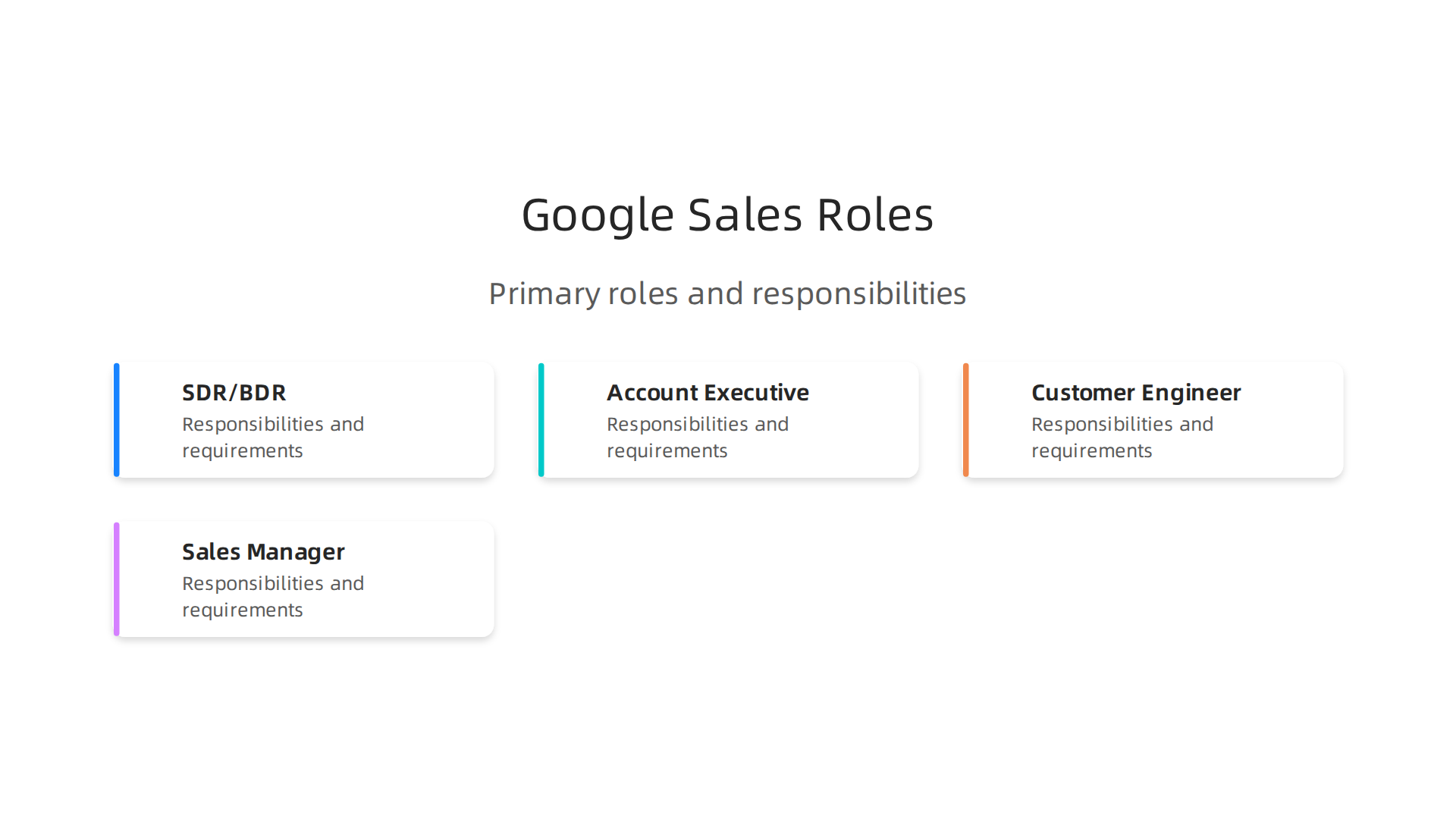
| Role | What You Do | What You Need |
|---|---|---|
| Sales Development Representative (SDR) or Business Development Representative (BDR) | You find new leads and qualify them before passing them to Account Executives. This is the entry-level role for most people. | Strong communication skills, resilience, and a desire to learn. No prior sales experience is usually required. |
| Account Executive (AE) | You close deals. You manage relationships with clients and sell Google products like Google Ads or Google Cloud. | Proven track record in closing sales. You need at least a few years of experience in a similar role. |
| Customer Engineer | You work as a technical expert alongside the sales team. You help explain how Google’s products solve customer problems. | Deep technical knowledge, often in cloud computing or AI. A background in engineering or IT is typical. |
| Sales Manager | You lead a team of AEs or SDRs. You coach, set quotas, and drive strategy. | Strong leadership and a history of hitting or exceeding targets in a sales role. |
According to recent sales statistics from Salesforce, companies with clear role definitions see higher quota attainment. Google knows this well. They keep roles clearly defined so you know exactly what is expected.
How Career Progression Works
Here is the good news. Google has a structured path for moving up. Most people start as an SDR or BDR and work their way up to Account Executive. From there, you can become a Senior AE, then a Sales Manager, and eventually a Director or Vice President.
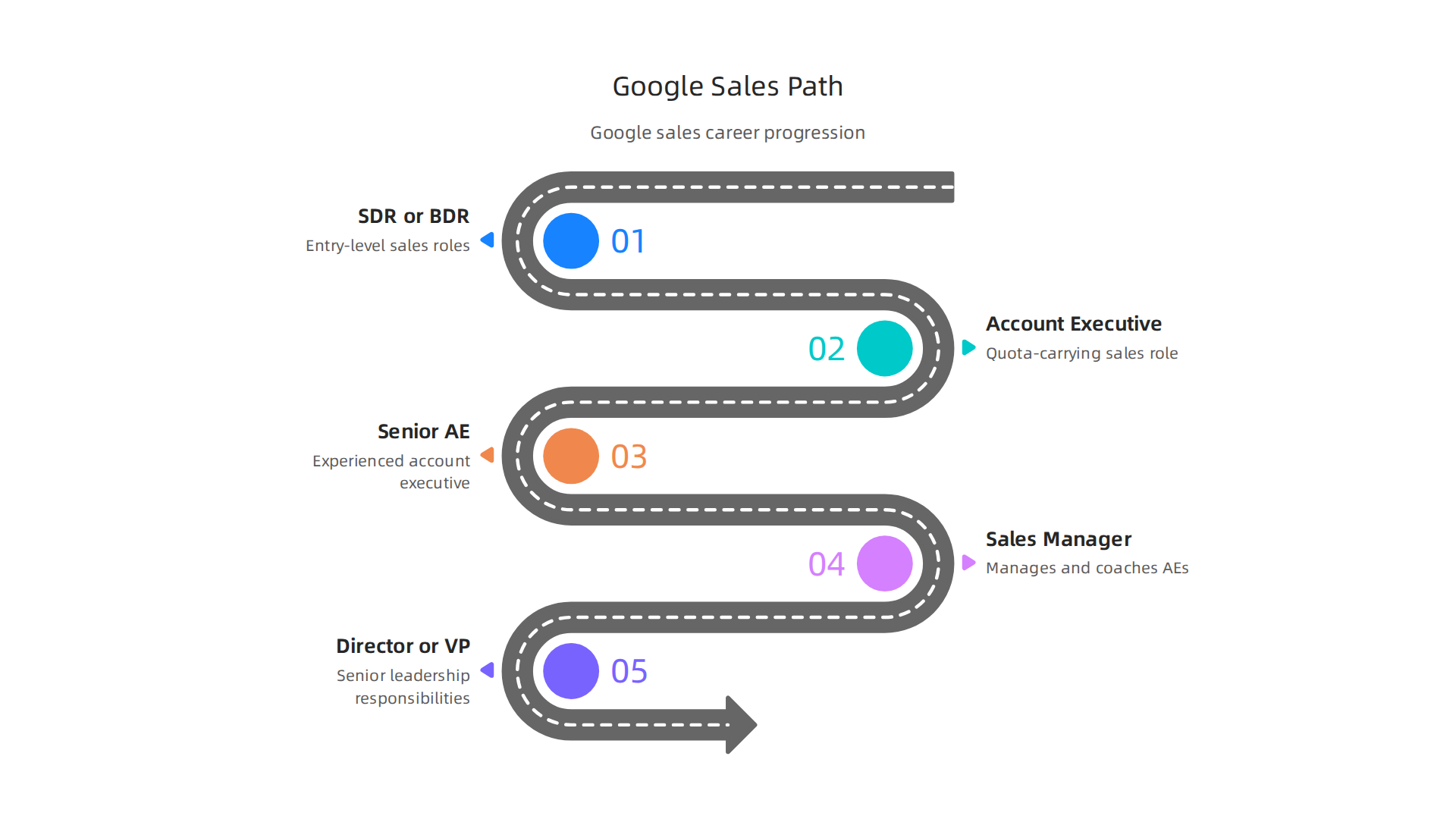
But here is the thing. You are not stuck in one lane. Google operates across multiple product areas. You might start selling Google Ads, then pivot to Google Cloud, and later move to Google Workspace. A 2026 compensation trends report from Robert Half shows that professionals who diversify their skills across product lines earn up to 15% more. That kind of flexibility is rare in most companies.
Remember how I mentioned wellstar careers or zapier careers in other guides? At Google, you get that same kind of mobility but with bigger budgets and more resources.
Inside Sales vs. Field Sales vs. Partner Sales
This is where many people get confused. Google splits its sales force into three main categories.
- Inside Sales: You work from an office or remotely. You sell over the phone, via video calls, or through digital channels. Most SDRs and junior AEs start here.
- Field Sales: You travel to meet clients face-to-face. This is more common for senior AEs and Customer Engineers, especially when selling big deals like Google Cloud contracts that can be worth millions.
- Partner Sales: You work with third-party companies, like agencies or resellers, to sell Google products indirectly. This role requires strong relationship-building skills.
According to data from Everstage, inside sales roles have grown 20% faster than field roles in 2026. That means more opportunities for people who prefer working remotely or don’t want to travel.
Why This Matters for Your Job Search
When you explore careers Google, do not just look at the job title. Read the description carefully. Ask yourself: Is this inside sales or field sales? Does it focus on Ads or Cloud? Knowing the answer helps you target roles that match your skills and lifestyle.
And here is a pro tip. Use tools like Genspark AI to research specific teams and learn what skills they value most. That way, you walk into interviews ready to talk their language.
If you want a broader view of where sales is going, check out our 2026 sales career roadmap. It shows how Google fits into the bigger picture of high-paying sales jobs.
The bottom line is simple. Google’s sales organization offers a clear path from entry-level to senior leadership. You just need to know which door to walk through first.
Essential Skills for a Google Sales Role: What Recruiters Look For
You now understand the different roles inside Google’s sales machine. But knowing the job titles is only half the battle. The real question is: what skills do you actually need to get hired?
Let me save you some guesswork. Google recruiters look for three specific skill buckets. If you can show strength in all three, your chances of landing a careers Google role go way up.
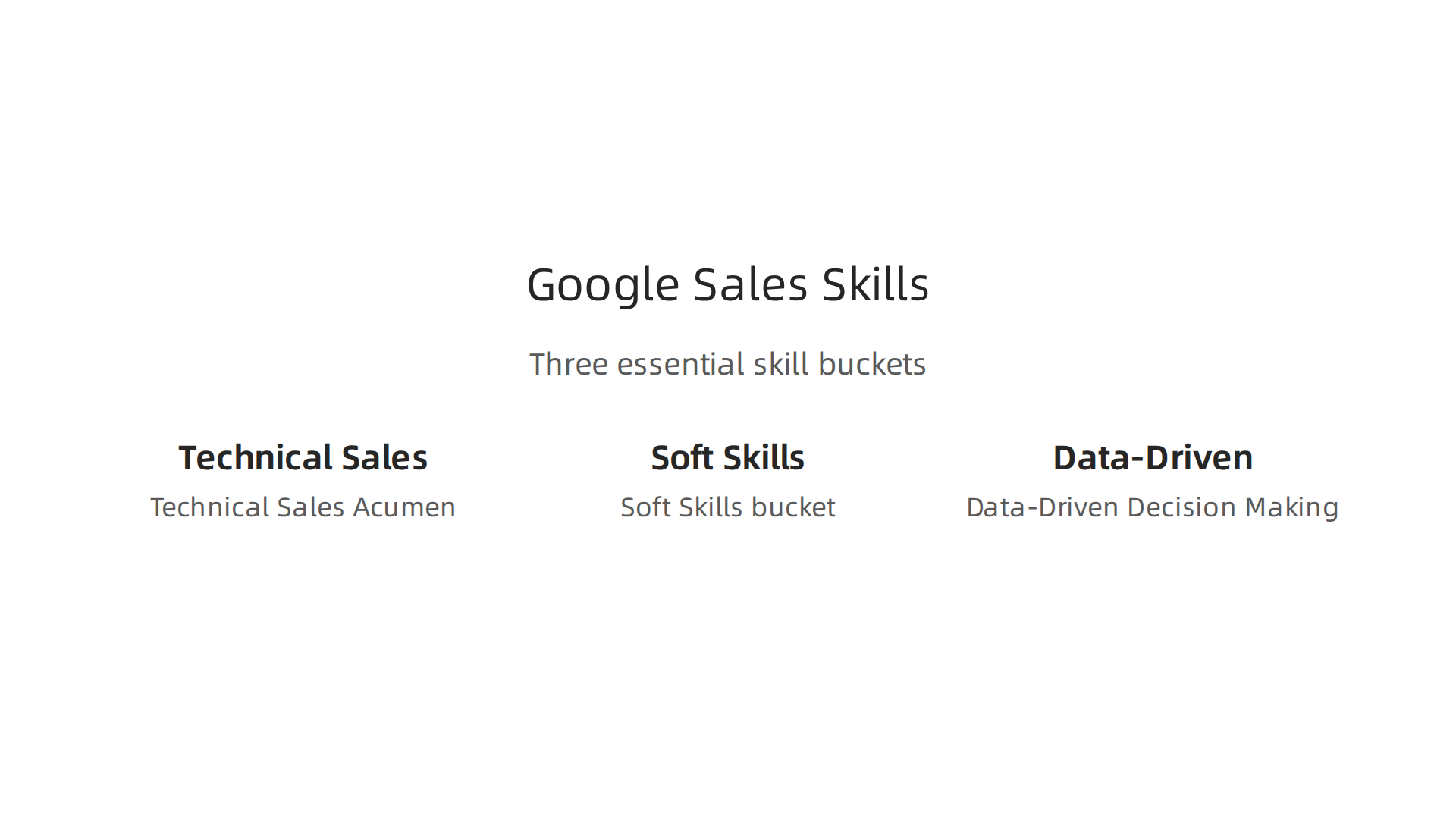
Technical Sales Acumen: More Than Just Talk
Gone are the days when sales was just about charm and a firm handshake. In 2026, Google wants salespeople who actually understand the products they sell. That means you need to be comfortable talking about cloud computing, SaaS platforms, and AI tools.
Here is the thing. You do not need to be an engineer. But you need to speak the language. Over 70% of Google Career Certificate graduates report positive career outcomes within six months, according to a complete 2026 guide on Google AI certifications. That is a huge signal that Google values candidates who invest in learning their tech stack.
You can earn these credentials directly through Google Skills career certificates in areas like IT Support, Data Analytics, and Project Management. Each one builds the vocabulary and confidence you need for technical sales conversations.
Soft Skills That Actually Matter
Here is where many applicants drop the ball. They focus only on technical skills and forget the human side. Google specifically weights soft skills like adaptability, problem-solving, and cross-functional collaboration very heavily in their hiring rubric.

Why? Because at Google, you will work with product teams, marketing teams, and engineering teams all at once. You need to translate between them. A review of Google Career Certificates notes that these programs also emphasize real-world problem-solving, which prepares you for exactly this kind of cross-functional work.
Think about it this way. When you look at wellstar careers or zapier careers, the same pattern appears. Top companies want salespeople who can adapt fast and work well with others. Google just raises the bar even higher.
Data-Driven Decision Making and CRM Skills
You cannot wing it at Google. Every decision needs evidence. That is why data-driven thinking and CRM proficiency are often prerequisites for careers Google roles.
You should be comfortable with tools like Salesforce or HubSpot. You should know how to pull reports, spot trends, and use data to tell a story. According to the Coursera Job Skills Report 2026, data analytics skills are among the fastest-growing in demand across all industries. Google is no exception.
If you feel shaky on CRM tools, do not panic. There are plenty of ways to build this skill fast. You can use tools like Genspark AI to identify exactly which skills you are missing and how to close those gaps. That kind of proactive learning is exactly what Google recruiters love to see.
The Bottom Line on Skills
Google does not expect you to be perfect on day one. But they do expect you to show a clear trajectory of growth. If you can demonstrate technical sales knowledge, strong soft skills, and data fluency, you will stand out from the crowd.
Focus on building these skills now, and you will be ready when that dream careers Google opportunity opens up.
Navigating the Google Careers Portal: How to Find and Apply for Sales Positions
You have built the skills. Now you need to find the right opening. The official careers Google portal at careers.google.com is your starting point. It is a powerful tool, but with thousands of listings, it can feel like finding a needle in a haystack.
Here is the good news. Google includes robust filters to narrow things down. You can sort by location, team, and experience level. For sales roles, look under the Sales & Account Management category. That is where most of the jobs you want live. Job codes and descriptions can be confusing, but focus on keywords like "Account Executive", "Sales Representative", or "Customer Engineer".
One trick that works well is using advanced search operators. You can type things like site:careers.google.com "sales" "account executive" into Google search itself. This often surfaces roles that the internal site search misses. Another smart move is to set up job alerts. When a new sales posting goes live, you get an email. Be fast. Google roles often close within days.
A complete guide to the interview process shows that Google typically runs 5 rounds over 6 to 8 weeks, including a phone screen and hiring committee review Ophy AI guide on Google interview rounds. That timeline means you need to start applying early and stay patient.
Before you hit "Apply", make sure your resume and LinkedIn profile reflect the skills we covered in the last section. Recruiters look for clear evidence of data-driven decision making and technical sales experience Google’s official interview tips for candidates. You can even review real questions people have faced on sites like Glassdoor to prep in advance Glassdoor Google sales interview experiences.
The official portal is just step one. Combine it with networking and smart searches to maximize your chances. And if you ever worry about falling for fake job postings from other companies, check out this guide on how to find legitimate sales jobs in 2026. It will help you stay safe while you hunt for that dream role.
Crafting a Compelling Application: Resume, Cover Letter, and Interview Prep
You have found a sales role on the careers Google portal that feels like a perfect match. Now comes the hard part: convincing Google you are the one. The hiring process is thorough, so every piece of your application needs to work for you.
Your resume is your first impression. Recruiters spend seconds scanning it. They look for numbers that prove you can deliver. Instead of saying "I increased sales," say "I grew revenue by 35% in 12 months" or "Consistently exceeded 110% of quota." Tie every bullet point to the job description keywords. If the role asks for "new business development," show how many new logos you closed. This common resume advice matters even more when applying through careers Google.
Cover letters are optional, but they can set you apart. Google’s mission is to organize the world’s information. If you can explain how your values match that mission, you show cultural fit. Use the cover letter to tell a short story about a time you solved a problem with creativity and data. That "Googleyness" factor is real, and interviewers assess it throughout the process Nerd Design Lab interview prep guide.
Now let’s talk interviews. Expect multiple rounds. The process usually starts with a phone screen with a recruiter. If you pass, you go into an onsite or virtual loop with several interviews. Some roles include a presentation or a role-play exercise to test your sales pitch. The key is preparation. Use resources like Google’s own interview tips to understand what they value: structured thinking, collaboration, and leadership.
Practice answering behavioral questions with concrete examples. The STAR method (Situation, Task, Action, Result) works well. You can also review real questions people have faced on Glassdoor Google sales interview experiences to get a feel for the format.
One more thing: Google values continuous learning. Over 70% of Google Career Certificate graduates see positive career outcomes within six months ALM Corp Google AI Professional Certificate guide. If you lack formal training in a sales tool or CRM, consider earning a certificate to strengthen your resume.
As you polish your application, remember that preparation is your best advantage. For a broader look at landing top sales roles in 2026, check out our complete sales career roadmap. It will help you stay on track from application to offer.
Take it one step at a time. Revise that resume, write a mission-driven cover letter, and practice your answers until they feel natural. Google looks for people who are both skilled and genuinely excited to solve problems. Show them that’s you.
Remote Sales Opportunities at Google: What You Need to Know
Maybe you are hoping to work from home while building a career at Google. That dream is more realistic than you think.

In 2026, Google offers a mix of fully remote, hybrid, and in‑office sales roles. The best part? Remote opportunities are growing, especially in certain product areas.
Where are remote sales roles most common at Google?
You will find more remote openings in teams like Google Cloud and in smaller market segments. For example, companies are posting hundreds of entry‑level Google Cloud sales jobs on platforms like Indeed (Indeed entry‑level Google Cloud sales). These roles often allow you to work from home while serving customers across different regions. Google’s own careers page for sales, service, and support lists roles that can be remote, hybrid, or based in an office (Google Careers sales teams). The key is to filter for “remote” when searching on careers Google.
What skills do you need to succeed in a remote sales role at Google?
Remote sales success comes down to self‑discipline, strong virtual communication, and comfort with video prospecting tools. You need to manage your time without someone looking over your shoulder. You also need to build trust through a screen. According to a 2026 guide from Coursera, companies look for people who can adapt to digital selling and use technology to connect with prospects (Coursera remote sales jobs guide). Google is no different. If you practice using your webcam and learn how to run effective virtual meetings, you will stand out.
What about pay?
Salary packages for remote roles at Google are often adjusted based on your location. But do not worry. Google typically offers competitive compensation no matter where you live. The overall trend in remote work is positive. Remote job postings increased 20% over Q4 2025, driven by high‑paying roles (MoneyTalksNews remote work trends). Even though only a small percentage of all new job postings are fully remote (4% according to Robert Half), those roles often come with strong pay and benefits (Robert Half remote work statistics 2026).
Other companies with remote sales roles
Remote sales roles are also common at other top employers like Wellstar, Zapier, and Brex. And tools like Genspark AI can help you sharpen your prospecting and close skill gaps. For a deeper look at using digital tools to land and thrive in remote sales, check out our guide on mastering your sales job search with Lovable AI.
The bottom line: Google has real remote sales opportunities in 2026. Focus on building your virtual communication skills, search the right job listings, and be ready to show you can deliver results from anywhere.
Summary
This guide walks job seekers through landing a sales role at Google, explaining why the company is an attractive employer and how its sales organization is structured. It breaks down the main job types—SDR/BDR, Account Executive, Customer Engineer, and Sales Manager—and explains inside, field, and partner sales so you can target the right path. The article outlines the technical, soft, and data skills Google recruiters prioritize and shows how certifications and CRM fluency boost your chances. It also covers practical steps for finding roles on the Google careers portal, tailoring your resume and cover letter with measurable results, and preparing for multi‑round interviews and role‑plays. Finally, the guide details remote sales opportunities, pay considerations, and the AI tools that help you close skill gaps, giving you a clear roadmap from application to offer.