

Introduction
Are you searching for a summer job that actually matters? Or maybe you want a year-round gig that keeps you active and teaches real life-saving skills. If so, you have probably looked into lifeguard jobs. The problem is, finding reliable information about certifications, where to apply, and how to move up can feel like trying to find a clear pool in a fog.

Here is the good news. The lifeguard job market is strong and getting stronger. According to CareerExplorer, there are about 113,500 lifeguards working in the United States right now.
And the market is expected to grow by 6.2 percent between 2022 and 2032. That steady demand means there are real opportunities out there for people who are ready to step up.
But not all lifeguard positions are the same. Some are seasonal summer roles at community pools. Others are year-round positions at water parks, beaches, or fitness centers. You might find full-time work with benefits at a municipal pool, or you might prefer a part-time schedule that lets you balance school or another job. In fact, around 82 percent of lifeguards work part-time, according to CareerExplorer’s demographics data. Many people start with seasonal gigs and later move into leadership roles like head guard or aquatic supervisor.
Of course, you need to know where to look. City-run facilities often post openings through specific government portals. For example, you might search for city of scottsdale jobs or city of cleveland jobs if you live near those areas. Other municipal openings show up under city of surprise jobs or city of fort collins jobs. Each city handles hiring a little differently, so knowing the right channels saves you time.
Pay also varies a lot by location. Nationally, the average hourly rate for a lifeguard is about $13.98 in 2026, according to PayScale. But in places like the District of Columbia, Hawaii, and California, lifeguards earn a mean hourly wage above $21.00, as reported by the Bureau of Labor Statistics. That makes a big difference if you are choosing where to apply.
The bottom line is this. Lifeguard jobs offer a rewarding entry point into water safety. They teach you responsibility, quick thinking, and teamwork. And with the right approach, you can find a position that fits your schedule and your goals.
If you are also exploring other career paths alongside lifeguarding, you might find it helpful to check out our guide on how to land city of santa ana jobs for tips on navigating government job boards.
Now, let us walk through exactly how to find, land, and grow a lifeguard career in 2026.
Understanding Lifeguard Jobs: Roles, Responsibilities, and Work Environments
Not every lifeguard job looks the same. If you picture a lifeguard sitting in a tall chair at a neighborhood pool, you are only seeing one slice of the picture. The truth is, lifeguard jobs exist in many different settings. And the work you do day to day changes a lot depending on where you sit.
Let us break down the main types of aquatic facilities where lifeguards work.
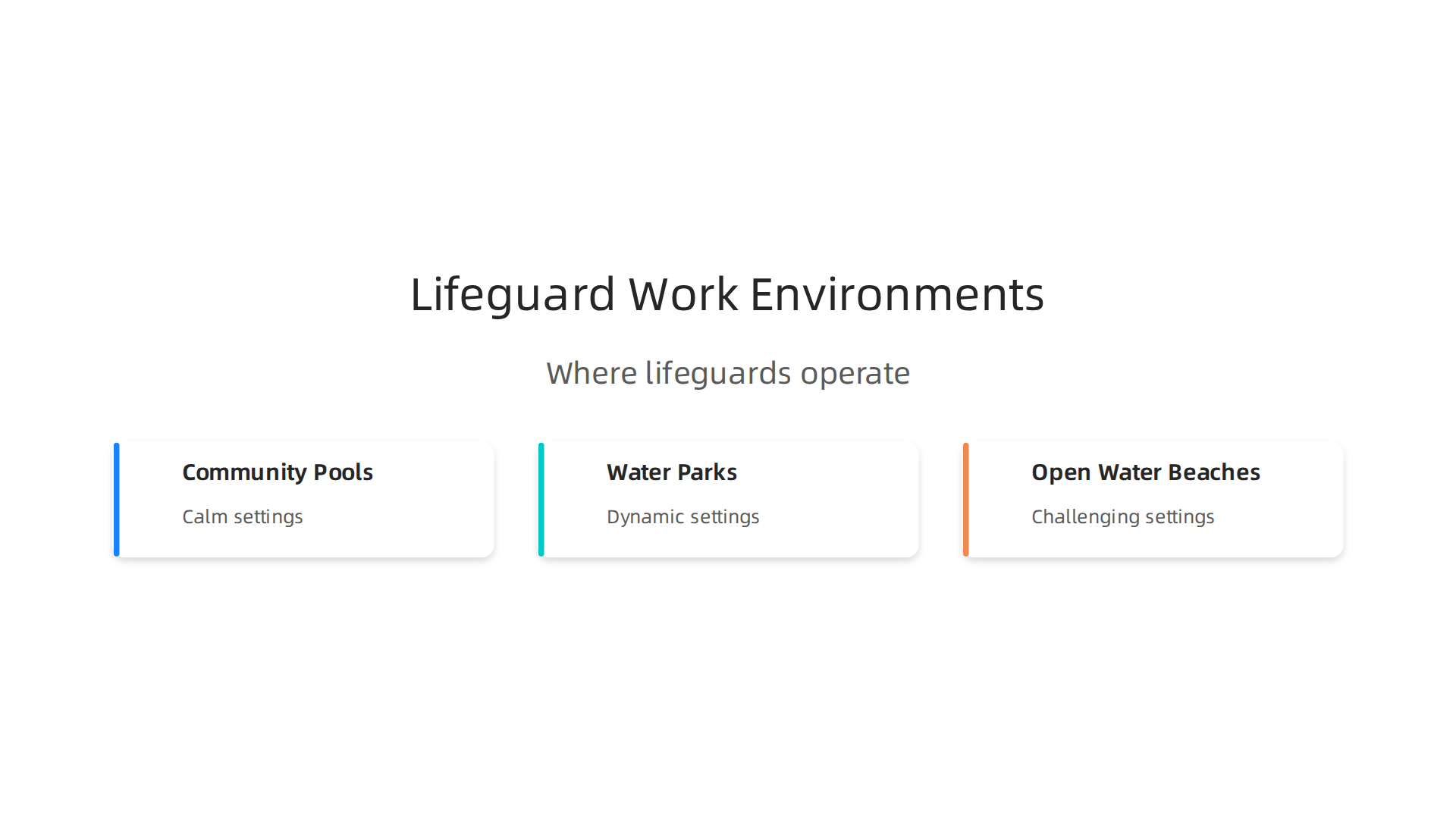
Community Pools and Municipal Recreation Centers
These are the most common spots. You will find them in local parks, school districts, or city-run facilities. The water is usually calm and the crowd is mostly families and kids. Your main job is to keep a close watch on everyone swimming. You will also enforce pool rules, help lost children, and respond to minor injuries. Many cities hire lifeguards through specific portals. For example, you might see postings for city of scottsdale jobs or city of surprise jobs if you live in Arizona. Other places use general government job boards like those for city of fort collins jobs or city of cleveland jobs. Each city has its own process, so knowing the system helps.
Water Parks
Water parks are a totally different world. You have wave pools, lazy rivers, and high-speed slides. The noise level is higher. The crowds are bigger. And the risks change. A lifeguard at a water park must watch moving water and spot swimmers in trouble fast. You might work in rotating stations, standing at the bottom of a slide or scanning a crowded wave pool. The pace is faster, and the training is often more intense.
Beaches and Open Water
Beach lifeguarding is a unique job. You deal with tides, rip currents, and changing weather. Your tools include rescue boards, jet skis, and binoculars. You also work in direct sun for long hours. Beach lifeguards need strong swimming skills and knowledge of ocean conditions. This role is often year-round in warm states like Hawaii or California. According to the Bureau of Labor Statistics, lifeguards in the District of Columbia, Hawaii, and California earn a mean hourly wage above $21.00, which makes beach areas attractive for higher pay.
Fitness Centers and Indoor Pools
Many gyms, hotels, and private clubs have pools. These are usually smaller and less busy. Your main duty is surveillance, but you might also clean the pool area or check chemical levels. The pace is slower, which can be a good fit if you want a quieter job.
No matter the setting, every lifeguard shares core responsibilities. You are always scanning the water. You are ready to jump in for a rescue. You perform first aid and CPR when needed.

And you keep equipment like rescue tubes and backboards in good shape. The American Lifeguard Association emphasizes that effective surveillance is the most critical skill for preventing drownings and spinal injuries.
But here is the thing. The expectations really vary. At a busy water park, you might do hundreds of rescues per season. At a quiet hotel pool, you might go weeks without a single incident. That does not mean you can relax. Any moment a swimmer can get into trouble. According to a CDC study on lifeguard effectiveness, the combination of dangerous physical features and heavy use by patrons increases the risk of water-related injury and death. So staying sharp matters.
Understanding the work environment helps you tailor your application. If you love fast action and big crowds, aim for water parks or beaches. If you prefer a steady routine, stick with community pools. Also, think about your fitness level. Staying in shape is a big part of the job. The article on physical fitness for lifeguards notes that regular training helps you perform duties safely and prevent injuries.
The skills you build as a lifeguard communication, quick decision making, teamwork are useful in many careers. If you are thinking about using your lifeguard experience to move into another field, you might find our guide on how to land a city of Seattle sales job helpful for translating those skills.
Now that you understand the different types of lifeguard jobs, the next step is getting certified. Let us look at what training you need and how to choose the right certification program.
Essential Certifications and Training Requirements for Lifeguards
Once you have decided what type of water environment fits you best, the next step is getting certified. You cannot apply for most lifeguard jobs without it. A certification shows employers you have the skills to keep people safe. It is your proof that you are ready for the job.
Which Organizations Offer Certification?
In the United States, three main groups provide lifeguard training. The American Red Cross is the most common and widely accepted. The YMCA offers strong programs too. And Ellis & Associates is known for training lifeguards who work at busy water parks.
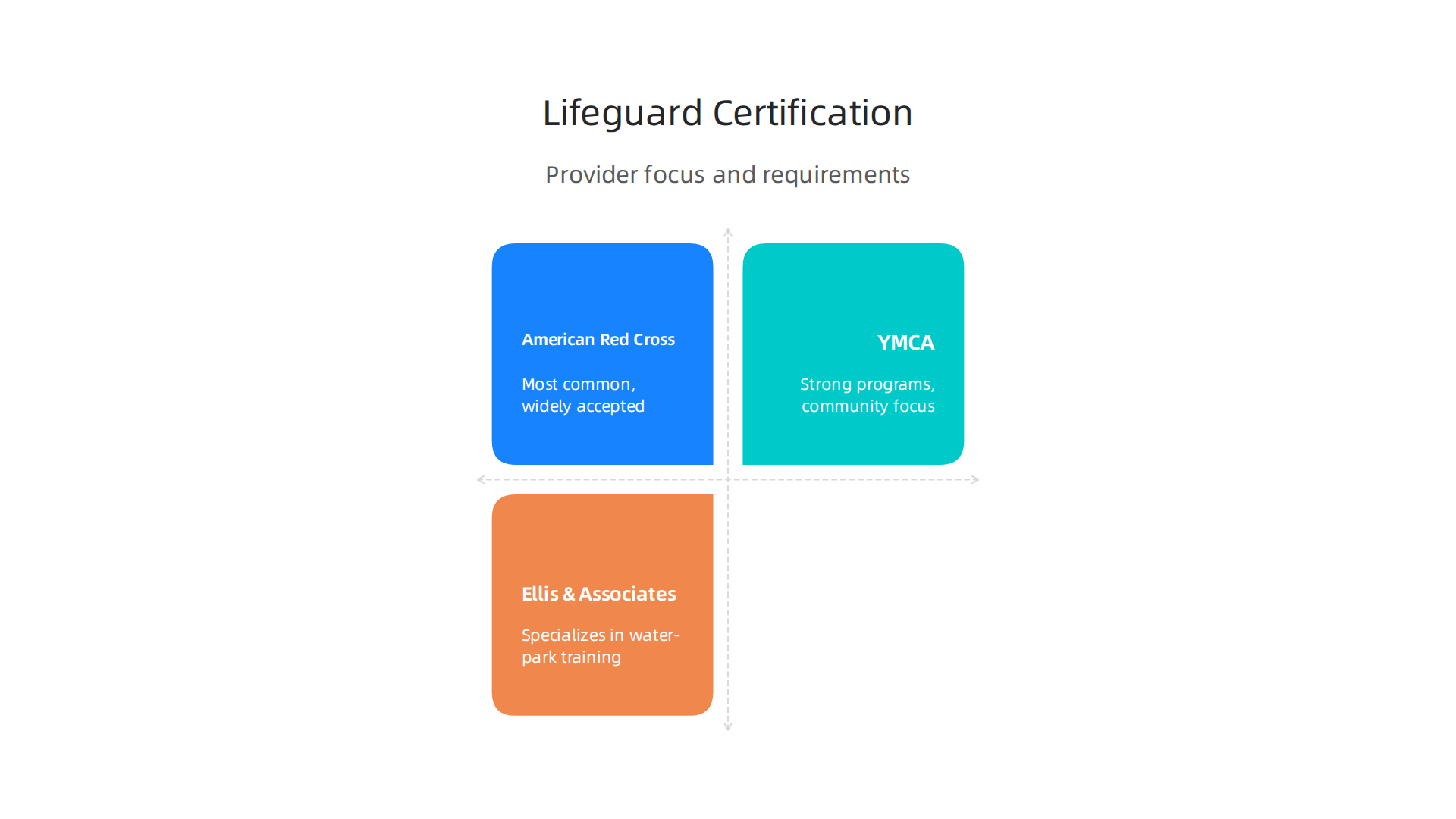
Each one has slightly different rules, but they all focus on the same goal. They want you to be ready for real emergencies.
Getting Certified Through the Red Cross
To earn a Red Cross certification, you must be at least 15 years old by the end of the course. You also have to pass a swim test before the class starts. The test usually includes a 300 yard continuous swim, treading water for 2 minutes without using your hands, and retrieving a 10 pound brick from the bottom of the pool. The American Red Cross Lifeguard Training page lists these requirements clearly. The course itself covers drowning prevention, rescue techniques, first aid, CPR, and AED use. You learn both in a classroom and in the water.

YMCA and Ellis & Associates Options
The YMCA has similar requirements. You need to be at least 15 years old in most states, though some locations set the minimum at 16. Their swim test includes swimming 200 yards, treading water for 2 minutes without using your hands, and doing a feet first surface dive. You can find specific details on your local YMCA website. Ellis & Associates takes a different approach. Their training is more intense and fast paced. It is built for high risk settings like wave pools and water slides. If you want to work at a water park, an Ellis certification is a great choice.
What You Will Learn in Training
Every certification program teaches the same core skills. You will learn how to scan the water to spot a swimmer in trouble. You will practice different types of rescues, including active victims and passive victims. You will train in first aid for cuts, bruises, and spinal injuries. And you will learn how to use an AED and perform CPR correctly. Most courses take around 25 hours. You must pass both a written test and a skills test to earn your certification.
Additional Credentials That Help You Grow
Your basic lifeguard certification is just the start. If you want to move up, consider extra training. A Water Safety Instructor (WSI) certification lets you teach swim lessons. This pays more than a regular lifeguard job. A Lifeguard Instructor (LGI) certification lets you train new lifeguards. These roles build leadership and communication skills. Those skills transfer to many other careers too. If you enjoy teaching and leading, you might find similar satisfaction in other professional roles. The discipline and people skills you develop as a lifeguard can help you open doors in many fields. Our roadmap to city of Santa Ana jobs in 2026 shows how structured training and public interaction can lead to great career opportunities.
Keeping Your Certification Current
Lifeguard certifications do not last forever. They expire after 2 years. To stay certified, you must take a review course and pass the skills test again. This process keeps your rescue and CPR skills sharp. Employers always check the expiration date on your card. Keeping your certification current proves you are responsible and ready to work. It also makes you a stronger candidate when you apply for new lifeguard jobs.
Once you have your certification in hand, you are ready to start applying. The next section covers where to find job openings and how to submit applications that get noticed.
Top Strategies for Finding Legitimate Lifeguard Jobs in 2026
So you have your certification. That is a big step. Now comes the next part. Finding the right job.

With over 113,000 lifeguards currently employed across the United States and the job market expected to grow steadily in the coming years, there are plenty of chances to get hired. But you have to know where to look and how to spot a good opportunity. This section will show you exactly how to find legitimate lifeguard jobs in 2026.
Check Local Government Websites First
The single best place to find lifeguard jobs is on official city and county websites. Public pools, water parks, and beaches are almost always run by local government. If you are looking for city of Scottsdale jobs or city of Fort Collins jobs, go straight to their official human resources or recreation page. These postings are always real. They include clear pay rates, shift details, and application steps. Searching city government sites filters out a lot of junk and fake listings. The same approach works if you are searching for city of Cleveland jobs or city of Surprise jobs. Always start with .gov websites. For more details on how to navigate these specific municipal job systems, check out this roadmap to city of Santa Ana jobs that applies to many city hiring processes.
Use Dedicated Aquatics Job Boards
Beyond government sites, there are job boards that focus just on aquatics. These boards collect postings from community pools, summer camps, hotels, and water parks. They save you time. Instead of scrolling through hundreds of unrelated ads, you see only lifeguard jobs that match your skills. Some boards even let you filter by certification type or season. Bookmark these sites and check them weekly in early spring, which is when most facilities start posting.
Network With Local Facilities
A lot of lifeguard jobs never get posted online. Walk into your local community pool or YMCA and ask if they are hiring. Talk to the head guard or the aquatics director. Drop off your resume. When they see your face and know you are serious, you move to the top of the list. Networking works well for seasonal hiring, which is the most common type of lifeguard work. In 2026, about 82% of lifeguards work part time. Facilities love candidates who show up and show interest before a formal job opening is announced.
Watch the Calendar Carefully
Timing matters a lot for lifeguard jobs. Most seasonal positions open in early spring for summer starts. If you wait until June to apply, the best spots are already filled. Start checking for job postings in February and March. Get your resume ready by then too. A strong resume that lists your certification up front catches a recruiter’s eye.
Learn to Spot Red Flags
Legitimate lifeguard jobs never ask you to pay money before you start working. If a job posting asks for a registration fee, a training deposit, or a uniform purchase out of pocket, walk away. That is a scam. Also watch out for vague job descriptions. If the posting does not mention the specific pool or beach, the hours, or the pay rate, be careful. Legitimate postings are clear and professional. The same scam warning signs apply across many job types. You can learn more about protecting yourself by reading this guide on how to find sales jobs in 2026 without getting scammed. The principles of spotting fake listings are the same no matter what field you are in.
Putting It All Together
Finding the right lifeguard job in 2026 takes a little planning, but it is worth it. The demand for qualified guards is strong. Focus on official government sources, use aquatics boards, network early, and watch the calendar. When you find a clean, clear job posting that matches your certification, you can apply with confidence and look forward to a great summer on the water.
Building a Competitive Lifeguard Resume and Acing the Interview
You have found the right job openings. Now you need to stand out. A strong resume and a confident interview are what turn an application into an offer. Here is exactly how to build both in 2026.
Write a Resume That Gets Noticed
Your resume needs to scream "I am ready to guard this pool" in the first five seconds. Recruiters look for three things first: your certification, your experience, and your soft skills.
Put your lifeguard certification right at the top. Do not bury it. If you hold a current American Red Cross Lifeguarding/First Aid/CPR/AED certification, list it clearly. According to experts from Enhancv, placing a dedicated certifications section near the top of your resume ensures recruiters see your credentials immediately. That includes any advanced training like Ellis & Associates courses or YMCA lifeguard programs.
Next, list any relevant experience. Even volunteer work counts. Did you help at a summer camp? Did you watch kids at a community pool? Put it down. If you have no direct lifeguard experience, highlight jobs that required responsibility, quick thinking, or working with people. Babysitting, coaching, or retail jobs all show you can stay calm under pressure.
Finally, weave in soft skills like vigilance, calmness during emergencies, and strong communication. Employers want to know you can scan a crowded pool and make a fast decision. Be specific. Say "maintained constant visual scanning of a 25-yard pool with 50 swimmers" instead of "watched pool." That small change makes a big difference.
Master the Interview With Situational Answers
Lifeguard interviews are not like typical job interviews. Managers care less about your favorite color and more about how you think in a crisis. They use situational questions to test your decision-making.
A common question is: "What would you do if you saw a swimmer struggling near the deep end?" Your answer should show you know the exact rescue steps and that you stay calm. Another classic from the Snagajob list: "What items do you need for your shift?" They want to see you know your gear and responsibilities.
Practice your answers out loud. Think of a specific example from your training where you made a good call. Maybe you spotted a swimmer who looked tired and blew your whistle early. That story shows awareness. According to Zenzap’s guide on lifeguard interview questions, candidates should recount a specific instance where they made a swift, effective decision. That is the kind of answer that lands the job.
Prepare Like a Pro
Mock interviews help a lot. Ask a friend or family member to throw you tough questions. Time yourself. The more you practice, the less nervous you will feel.
Using technology can also give you an edge. Just like professionals in other fields use tools to sharpen their skills, you can practice with AI interview simulators. The same principles that help sales candidates master their job search and career growth through rehearsal apply to lifeguard candidates too.
Put It All Together
Whether you are eyeing city of Scottsdale jobs, city of Fort Collins jobs, or a local community pool, the approach stays the same. Lead with your certification. Show you have the experience and the right mindset. Practice your situational answers. When you walk into that interview ready, you walk out with a job offer.
Career Progression in Aquatics and Safety: From Lifeguard to Manager
You did it. You landed the job. Now what?
For many people, lifeguard jobs are just summer gigs. But they do not have to be. In 2026, more organizations are building real career paths for their guards. The deck can be the start of a long and rewarding career in aquatics.
The key is knowing that you can move up. According to a report from MolecularCloud, well-run aquatic facilities focus heavily on a defined progression that goes from guard to lead to manager.
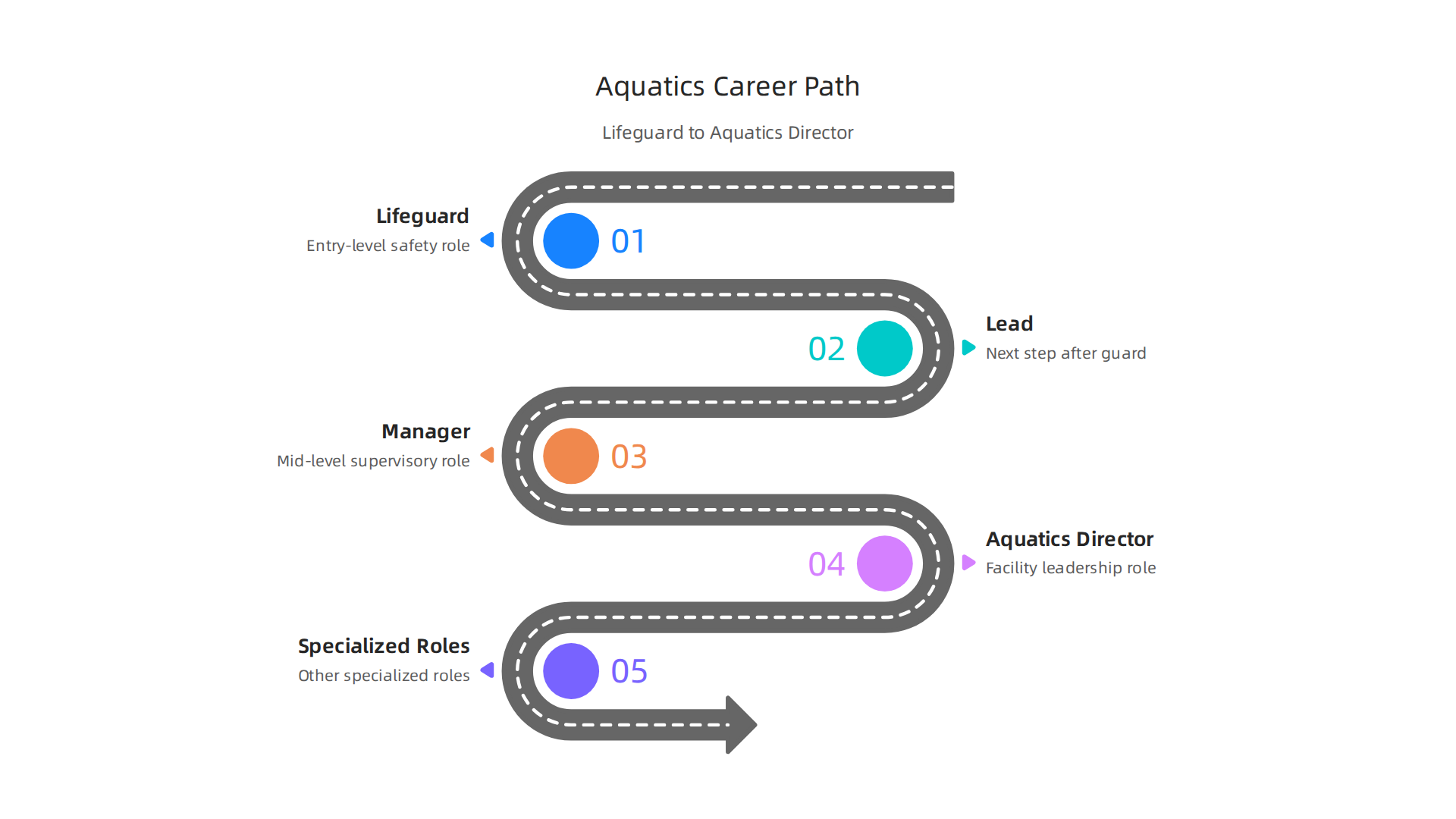
You just need to know the steps.
Your First Step Up
The most common promotion is to Head Lifeguard or Aquatic Supervisor.
In this role, you stop watching the water full time. Instead, you manage the team. You make the schedules. You run the drills. You make sure everyone is doing their job.
This is where you learn real leadership. You learn how to handle people, solve problems, and keep a team focused on safety. A great way to prepare is to ask your current manager if you can shadow them. The professionals at AquaticPros say giving young lifeguards hands-on experience in pool management is one of the best ways to train the next group of leaders.
The Big Goal: Aquatics Director
If you want to go even higher, you can aim for Aquatics Director.
This is a big job. According to the Complete Aquatics Director Career Guide on Himalayas, an Aquatics Director runs the entire pool program. That means keeping swimmers safe, managing the lifeguard team, and steering the facility budget. It is a mix of safety, business, and leadership.
It is a real career with real pay. You can search for roles like this on platforms like Indeed to see what is available in your area.
Other Career Options in the Water
Management is not the only path. You can also move sideways into other roles:
- Pool Operator: You keep the water chemistry safe and balanced.
- Water Safety Instructor: You teach swim lessons to kids and adults.
- Emergency Response Coordinator: You train others in CPR and first aid.
These jobs offer stable hours and solid pay. Many people combine them with a management role to build a full time career. The Cove at Lakefront explains that there are many diverse job opportunities waiting for people who start as lifeguards.
How to Make the Move
Moving up takes effort. Here is what you need to do in 2026:
- Get the right certifications. An Aquatics Director often needs a Pool Operator certification or a degree in recreation management.
- Take on extra work. Volunteer to train new guards. Offer to run the in service drills.
- Build a plan. You need a clear plan to move forward. The same way a structured roadmap can help someone target city of Santa Ana jobs, you need a plan to target your next promotion in aquatics.
Whether you started at city of Scottsdale jobs, city of Fort Collins jobs, or a small community pool, the opportunity is there. The pool deck is just the starting line. If you keep learning and keep leading, you can build a career that lasts.
Common Challenges Facing Lifeguards and How to Overcome Them
You love being in the sun. You love the water. You love knowing you save lives. But let’s be honest. Being a lifeguard is hard work. And in 2026, the job comes with real challenges that can wear you down if you are not ready.
The good news? Every challenge has a solution. You just need to know what to look for.
Physical Demands: The Body Takes a Hit
Standing for hours on hot concrete. Staring at the water without blinking. Jumping in for a rescue at a moment’s notice. Your body works hard every shift.
There are inherent risks associated with working in or near water. Slips and falls happen. A hard hit to the head can lead to a traumatic brain injury, even a concussion that causes memory issues. Regular fitness training can help you perform your duties effectively and safely, and it can also help prevent injuries. A strong core and good posture reduce back pain from standing. Stretching before your shift keeps your muscles ready.
Take your breaks. Use sunscreen. Wear supportive shoes. Your body is your most important tool. Treat it that way.
Mental Health: The Weight of Saving Lives
The job is stressful. You are responsible for everyone in the pool. Drowning and spinal injuries are some of the most traumatic events any program can face. And the trauma does not stop after the rescue.
The emotional toll is real. When you deal with emergencies, the pressure can build up. You might replay a save in your head for days. You might feel anxious every time a child gets too close to the deep end.
On duty lifeguards should practice effective surveillance techniques and be free of any distractions. But even the best focus cannot stop the mental strain. The consequences of a rescue can leave a physical, emotional, and financial toll.
Here is what helps:
- Debrief after every incident. Talk to your supervisor or a coworker about what happened.
- Use mental health resources. Many employers offer counseling or employee assistance programs.
- Know it is okay to ask for help. You are not weak. You are human.
Seasonal Employment: The Off-Season Scramble
This is one of the biggest challenges. Many lifeguard jobs are summer only. When the pool closes, the paycheck stops.
If you live in a place like Scottsdale, Fort Collins, Cleveland, or Surprise, you know the drill. The weather changes. The gates lock. And you are left wondering how to pay the bills.
But you do not have to settle for seasonal work. Diversifying your skills is the answer. You can get certified as a Water Safety Instructor and teach swim lessons year round indoors. You can become a Pool Operator and work at indoor facilities. Or you can take on part time work during the winter that uses your people skills.
A structured plan helps. The same way you need a roadmap to target city of Santa Ana jobs or city of Scottsdale jobs, you need a plan to find year round opportunities in aquatics. Look for indoor pools, therapy pools, and hotel pools that operate all year.
You Can Handle This
These challenges are real. But they do not have to stop you. With the right training, the right mindset, and a little planning, you can build a long, healthy career in the water.
The deck is tough. But so are you.
Summary
This article is a practical guide to finding, landing, and building a career as a lifeguard in 2026. It explains the different work environments—community pools, water parks, beaches, and indoor facilities—and the day-to-day responsibilities that vary by setting. You’ll learn which certifications (Red Cross, YMCA, Ellis & Associates) you need, what their swim tests require, and how to keep credentials current. The piece lays out where to find real job listings (start with city and county websites), how to spot scams, and the best timing to apply for seasonal roles. It also covers writing a focused resume, answering situational interview questions, and clear steps to move up into supervisory and director roles. Finally, the guide addresses the job’s physical and mental demands and offers practical strategies to manage seasonal work and stay fit and resilient.